

S.H. Raza - Ekāgratā
February 21- March 02, 2026 at Akar Prakar, Kolkata
“Drawings and paintings do not speak. They are a silent interlude.” - Raza
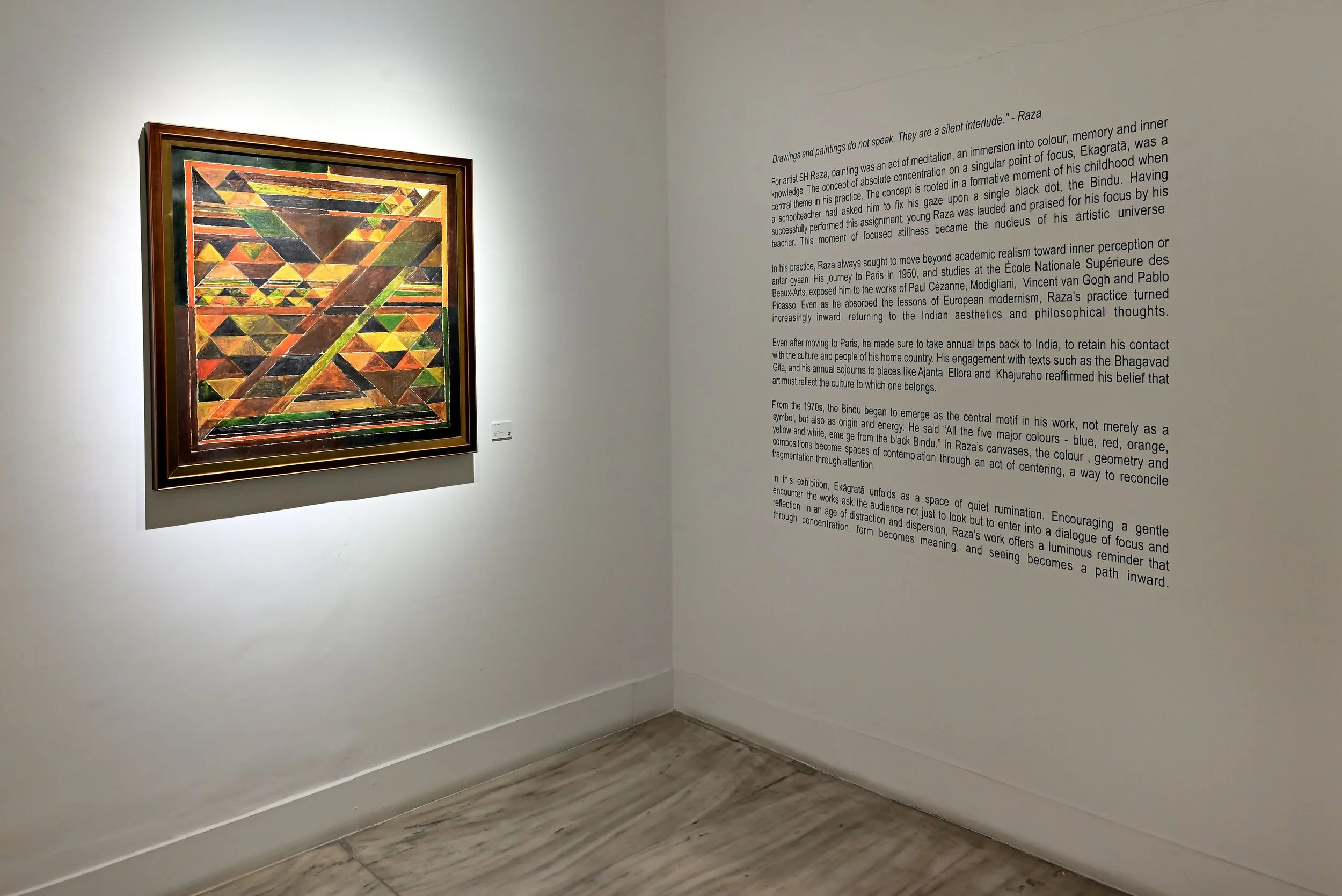
For artist SH Raza, painting was an act of meditation, an immersion into colour, memory and inner knowledge. The concept of absolute concentration on a singular point of focus, Ekāgratā, was a central theme in his practice. The concept is rooted in a formative moment of his childhood when a school teacher had asked him to fix his gaze upon a single black dot, the Bindu. Having successfully performed this assignment, young Raza was lauded and praised for his focus by his teacher. This moment of focused stillness became the nucleus of his artistic universe.
In his practice, Raza always sought to move beyond academic realism toward inner perception or antar gyaan. His journey to Paris in 1950, and studies at the École Nationale Supérieure des Beaux-Arts, exposed him to the works of Paul Cézanne, Modigliani, Vincent van Gogh and Pablo Picasso. Even as he absorbed the lessons of European modernism, Raza’s practice turned increasingly inward, returning to the Indian aesthetics and philosophical thoughts.
Even after moving to Paris, he made sure to take annual trips back to India to retain his contact with the culture and people of his home country. His engagement with texts such as the Bhagavad Gita and Vinoba Bhave, and his annual sojourns to places like Ajanta, Ellora and Khajuraho reaffirmed his belief that art must reflect the culture to which one belongs.
From the 1970s, the Bindu began to emerge as the central motif in his work, not merely as a symbol, but also as origin and energy. He said, “All the five major colours - blue, red, orange, yellow and white - emerge from the black Bindu.” In Raza’s canvases, the colour, geometry and compositions become spaces of contemplation through an act of centring, a way to reconcile fragmentation through attention.
In this exhibition, Ekāgratā unfolds as a space of quiet rumination. Encouraging a gentle encounter, the works ask the audience not just to look but to enter into a dialogue of focus and reflection. In an age of distraction and dispersion, Raza’s work offers a luminous reminder that through concentration, form becomes meaning, and seeing becomes a path inward.
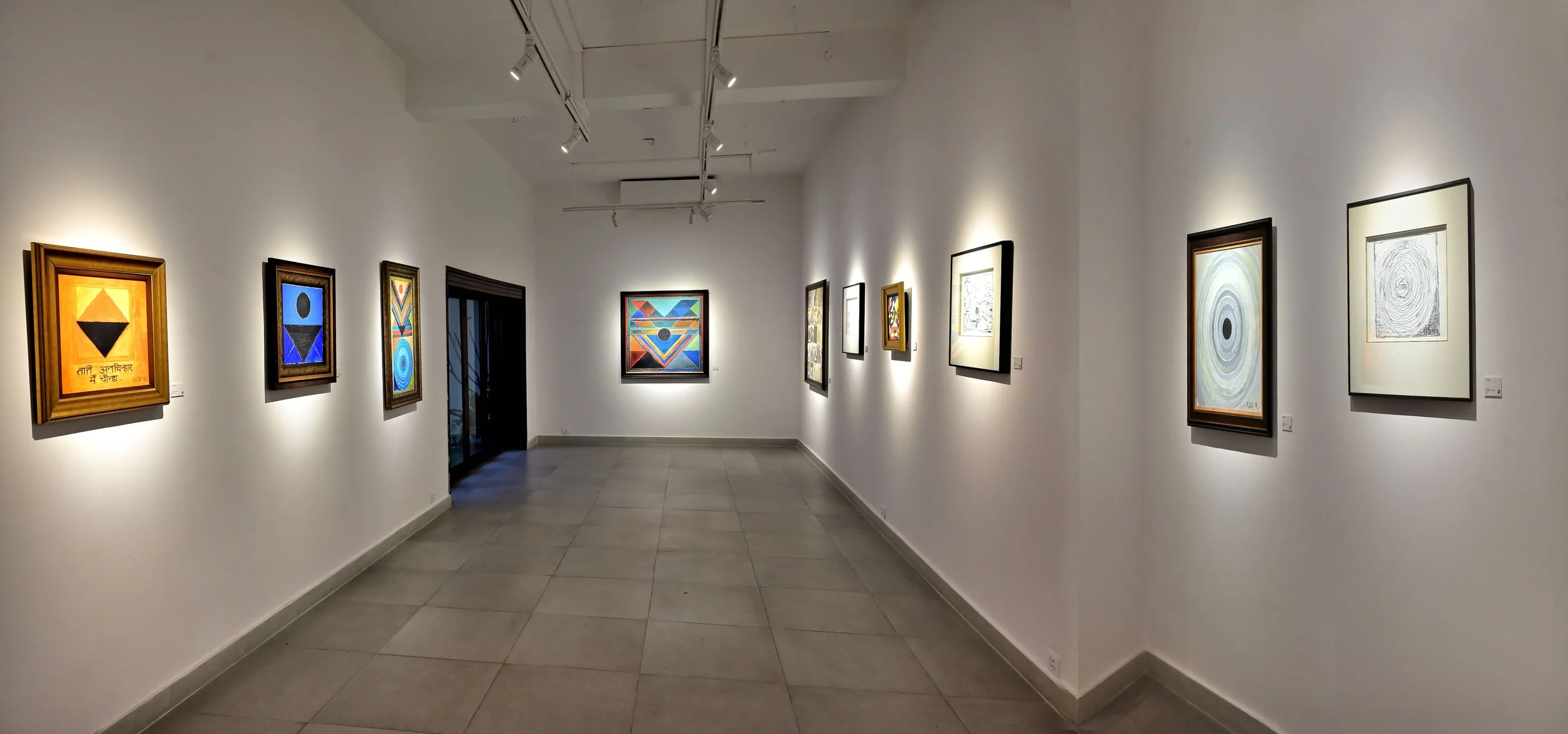
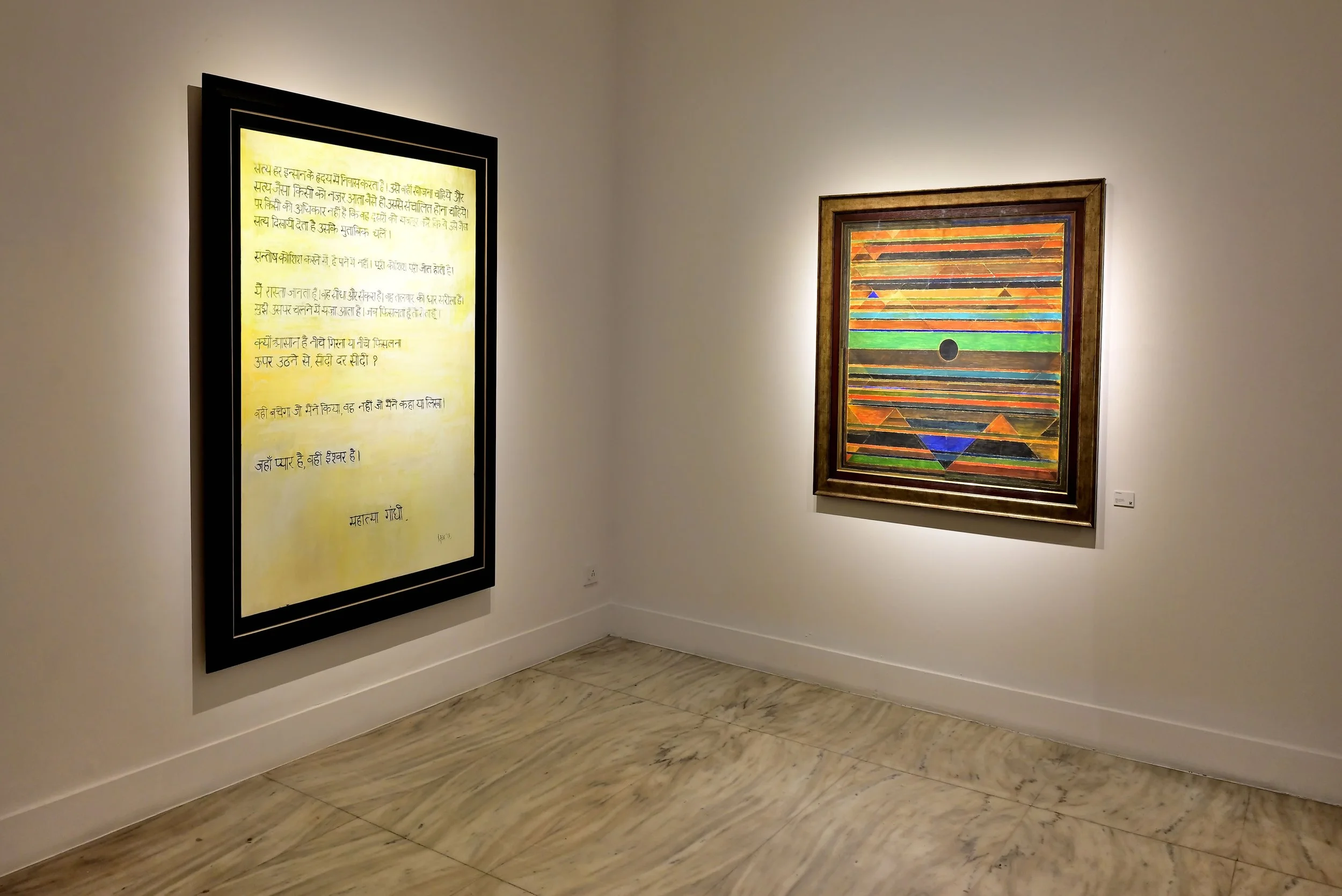
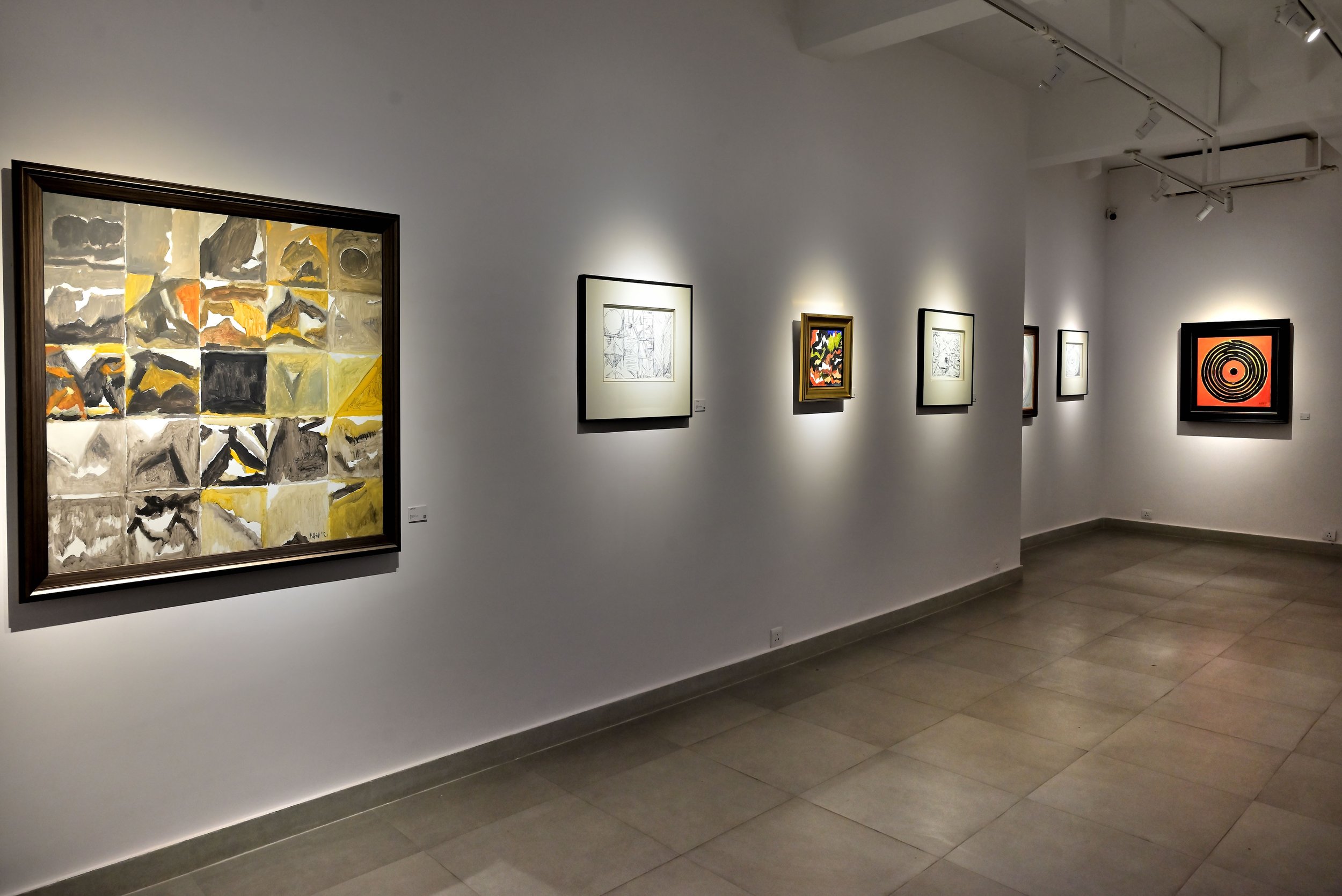

Taa-te | Acrylic on canvas | 16 x 16 in | 2015

Panch Tatva 3 | Acrylic on canvas | 24 x 24 in | 2016
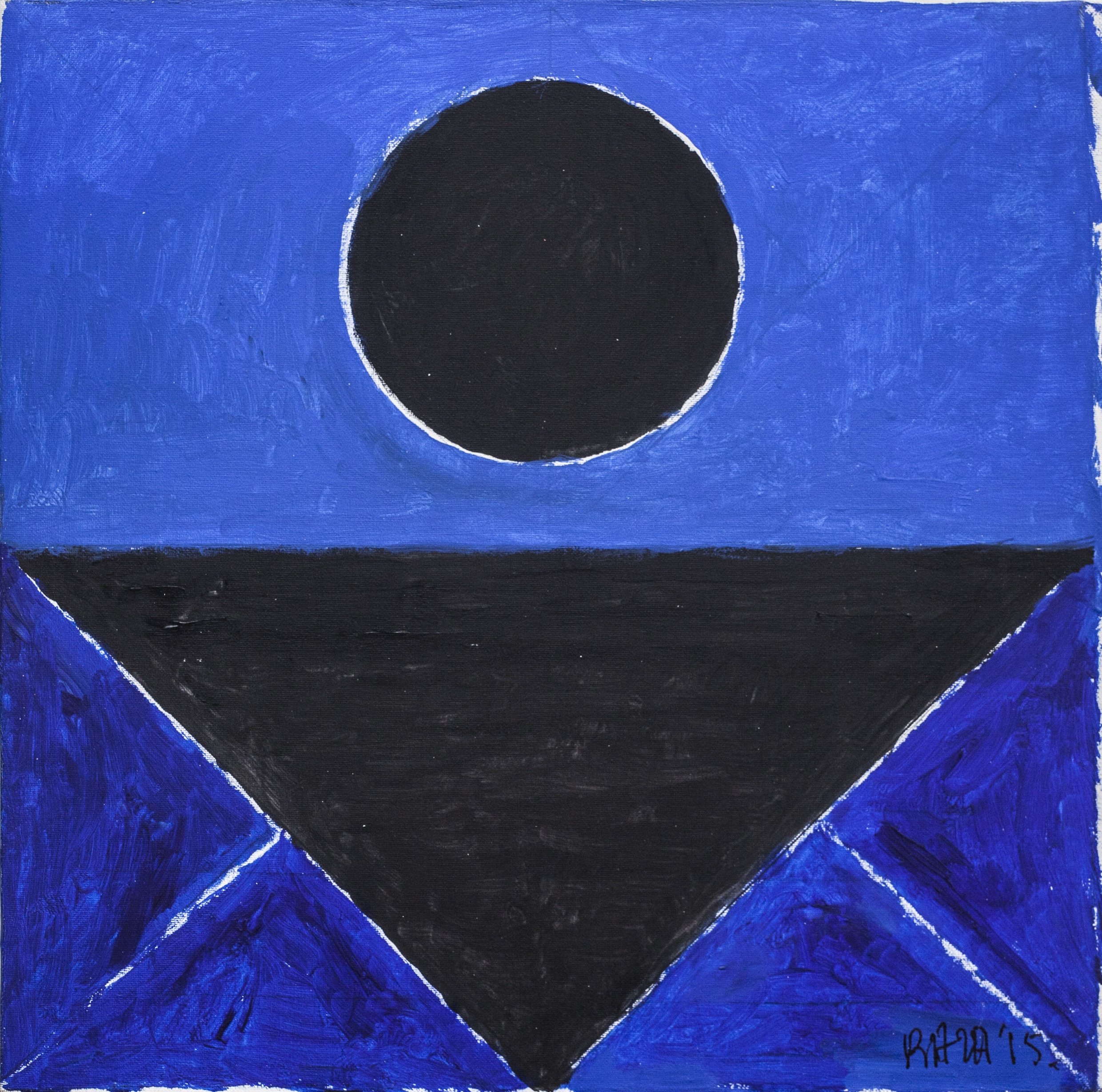
Roopakar | Acrylic on canvas | 6 x 16 in | 2015
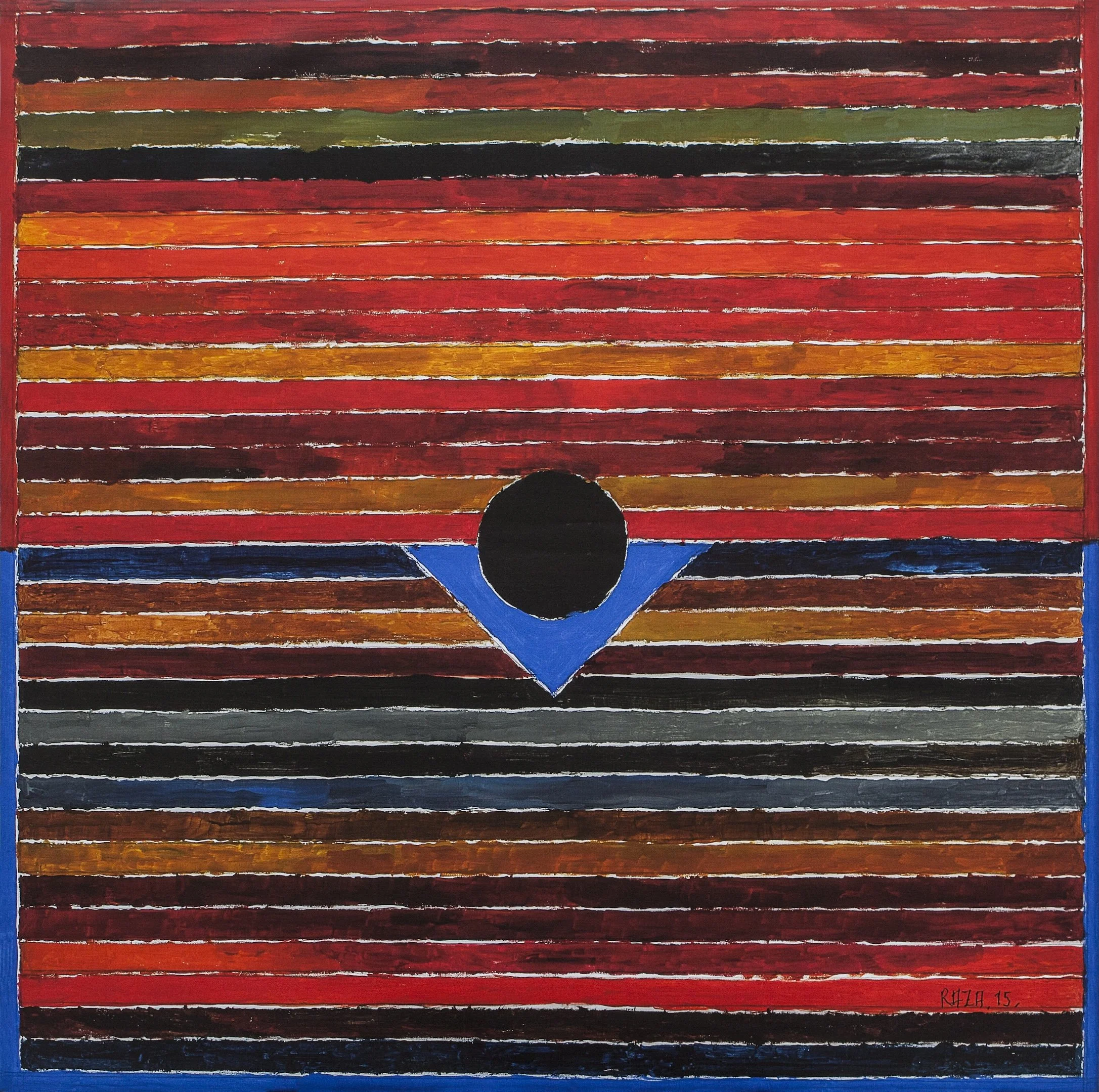
Nirantar (ed 2/4) | Print on canvas | 39 x 39 in | 2015
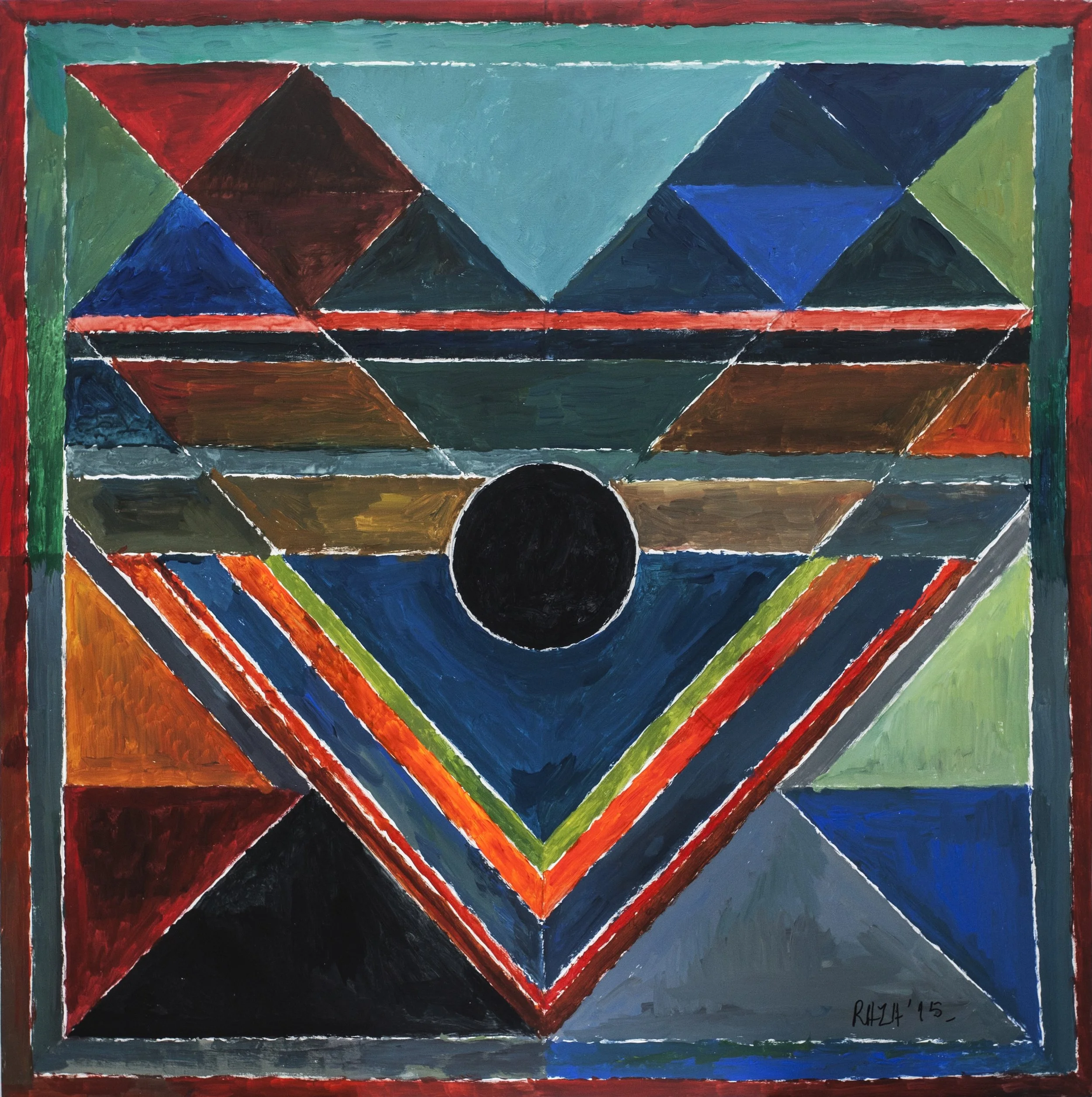
Akar Prakar | Acrylic on canvas | 40 x 40 in | 2015
Nagas | Acrylic on canvas | 24 x 24 in | 2011

Beej Vriksha | 32 x 16 in | Acrylic on canvas | 2013

Roop Arohi | Acrylic on canvas | 40 x 40 in | 2012
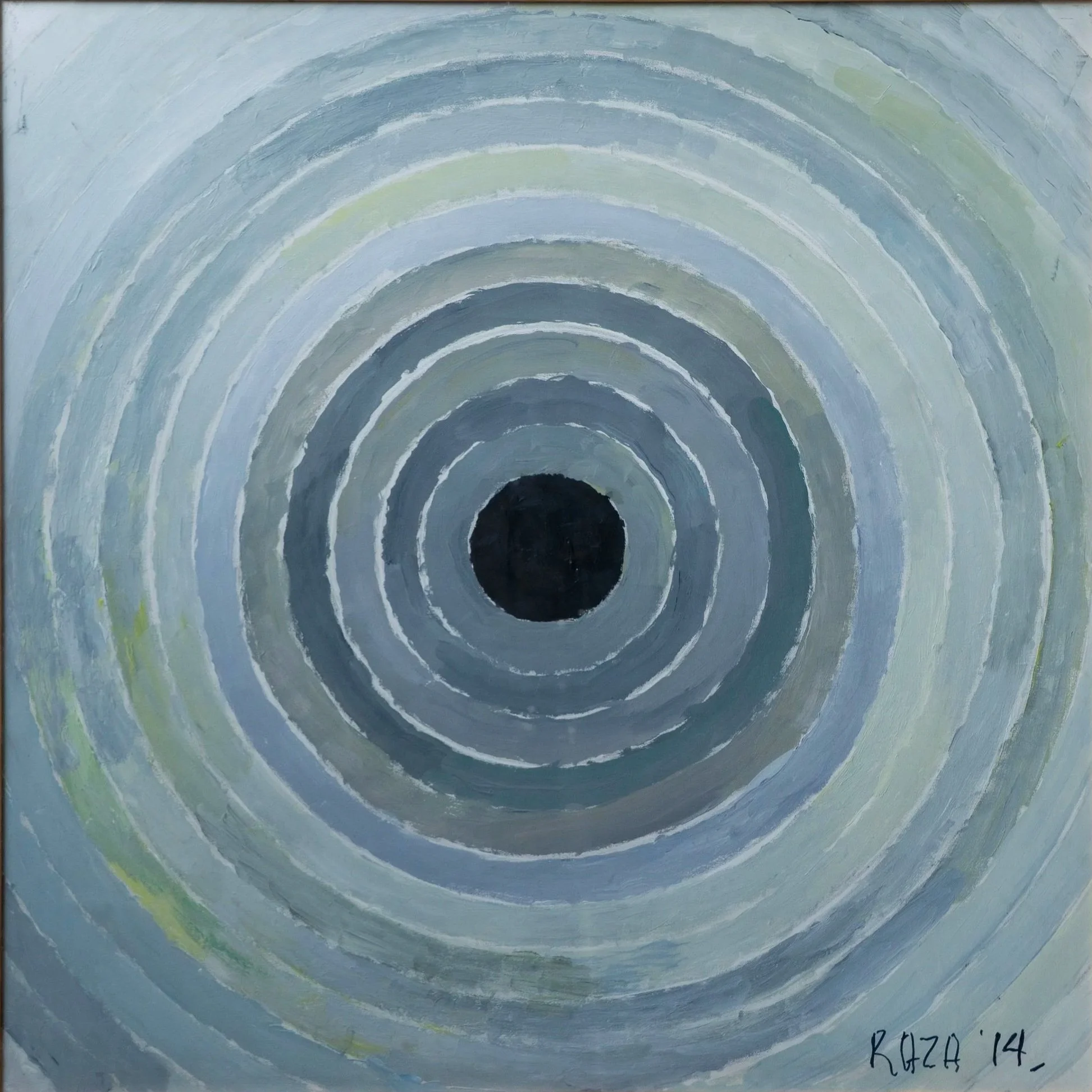
Shanti Bindu | Acrylic on canvas | 24 x 24 in | 2014

Chaturdik | Acrylic on canvas | 24 x 24 in | 2014

Untitled | Pastel on canvas | 12 x 12 in | 2011
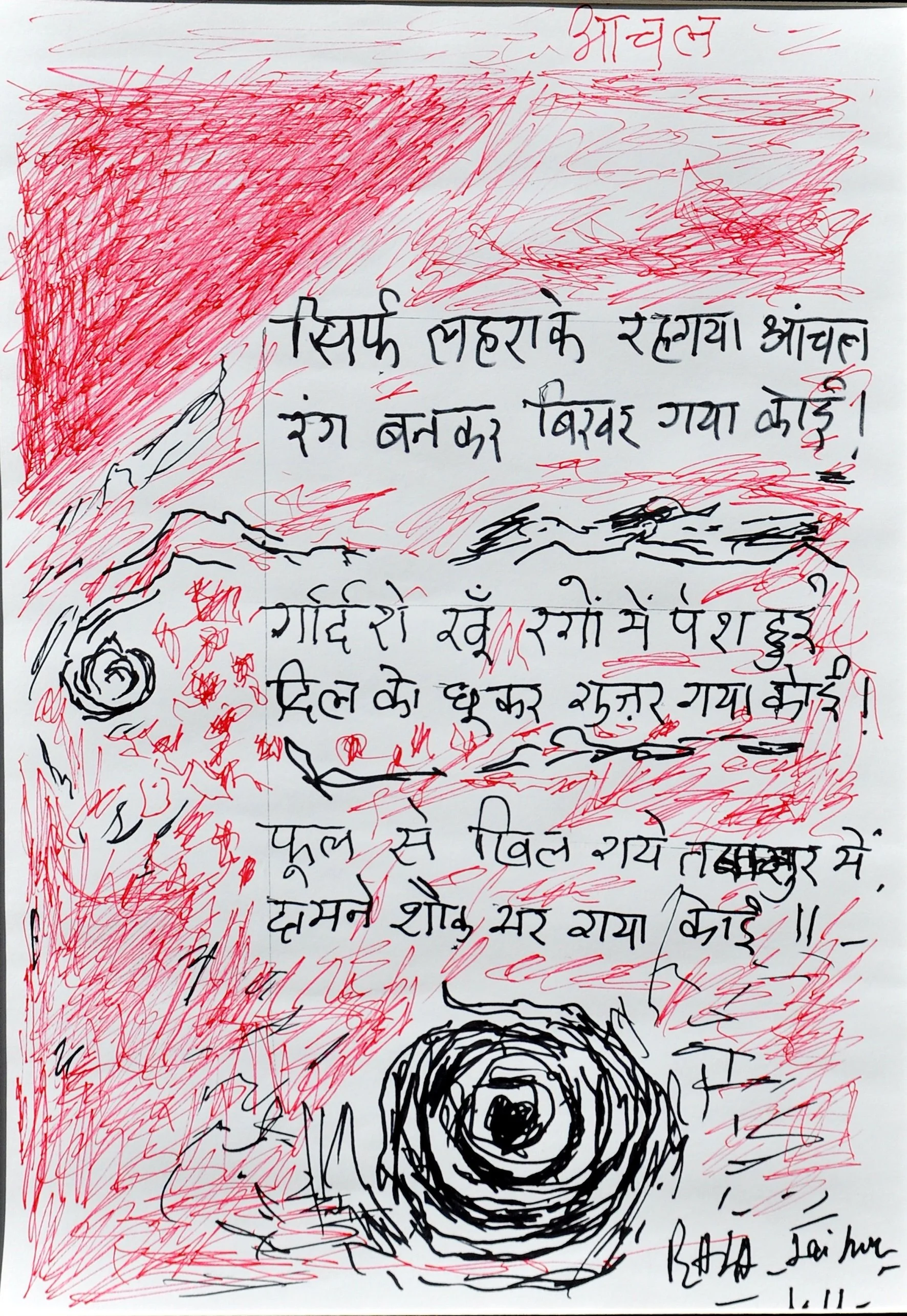
Sirf Leharake Reh Gaya Anchal | Pen and ink on paper | 16 x 12 in | 2011
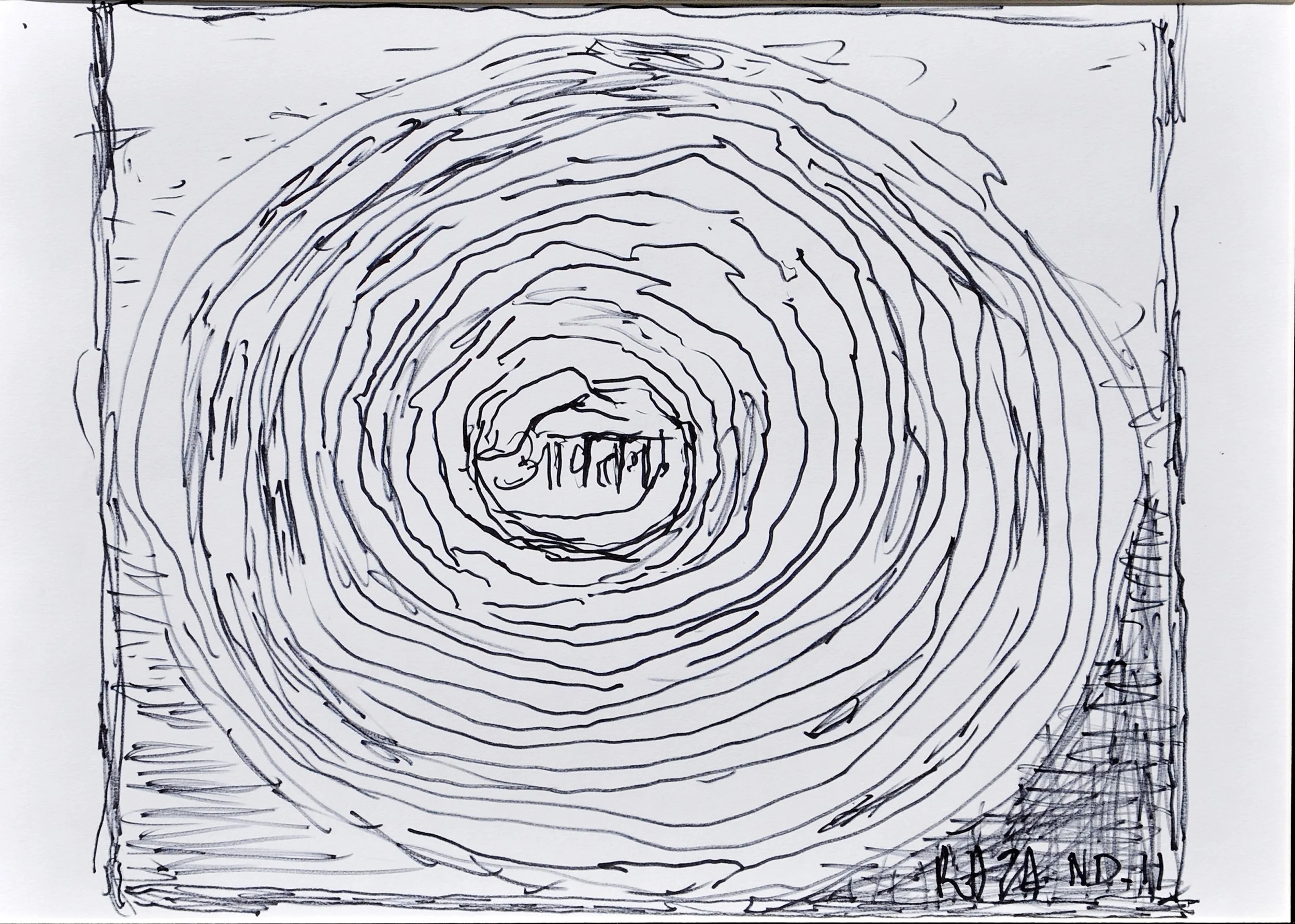
Untitled | Pen and ink on paper | 12 x 16 in | 2011

Untitled | Pen and ink on paper | 12 x 16 in | 2011

Untitled | Pen and ink on paper | 12 x 16 in | 2011
S.H. Raza (1922 - 2016)
Sayed Haider Raza was born in Madhya Pradesh, and studied painting at the Nagpur School of Art, and at the Sir J. J. School of Art, Bombay. After receiving a French government scholarship in 1950, he left for Ecole Nationale des Beaux Arts, Paris. Raza was awarded the Prix de la Critique in Paris in 1956. In 1962, he served as a visiting lecturer at the University of California in Berkeley, USA. Raza was one of the founders of the Progressive Artists’ Group, along with K.H. Ara and F.N. Souza. He participated in numerous exhibitions, including the Sao Paulo Biennale, 1958; the Biennale de Menton, France, 1966, 1968, 1978; and Contemporary Indian Painting, Royal Academy in London, 1982.
His works are mainly abstracts replete with references and icons from Indian cosmology and its philosophy. In 1978, the Madhya Pradesh Government invited him to his native state for a homage; and an exhibition of his work was organised in Bhopal. He was elected Fellow of the Lalit Kala Akademi in 1983. In 1997, Raza was awarded the Madhya Pradesh Government’s prestigious Kalidas Samman. He was conferred with the Padma Shri Award in 1981, the Padma Bhushan in 2007, and Padma Vibhushan in 2013.
He passed away in July 2016, in Delhi.