
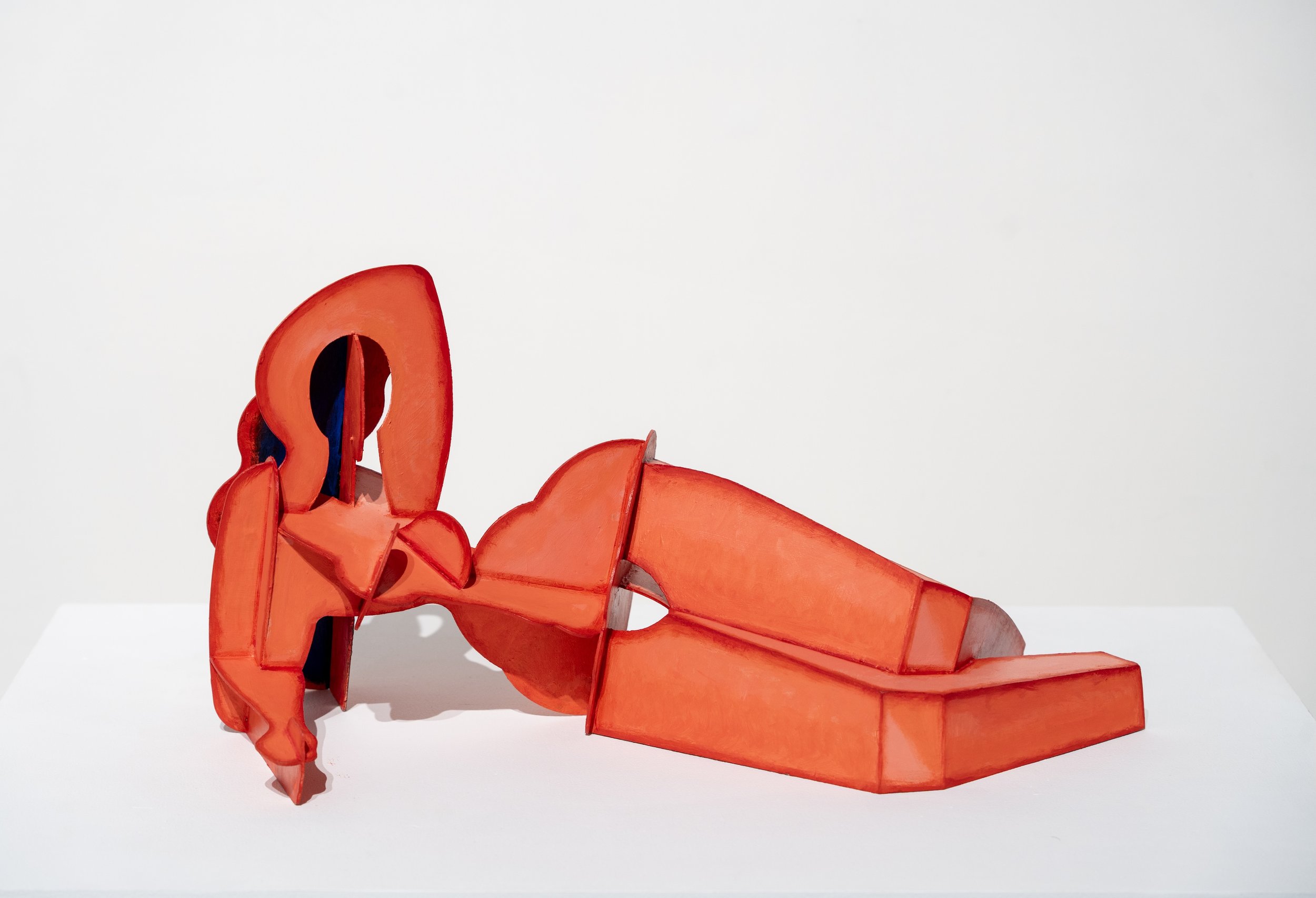
Moulding Outlines - A Sculptural Survey
December 3 - December 8, 2025 at Jehangir Art Gallery, Mumbai
Art practices in post-independence India presented a complex amalgamation of traditional and modernist visual aesthetics.
Many artists were looking at their cultural roots as inspiration for their artwork after the partition in the wake of colonial rule. As the decades progressed, numerous artists from across the country were sent to European institutions on scholarships and witnessed a turn towards more abstractionist and modernist influences in their practice.
In India, sculpting practices in particular have their roots dating back to the Indus Valley Civilization with small terracotta figurines depicting a range of wild and domesticated animals. Meanwhile, modern and contemporary sculpting practices in the country present a very different image. This exhibition attempts to map the transformative processes that shape the physical forms of sculptures and the broader narratives of identity, memory, and society in a newly independent nation. The show focuses on the modern artists from the three major hubs of artistic exchanges particularly Calcutta and Santiniketan in the East, Madras in the South and Baroda in the West along with a highlight on contemporary artists shaping the visual grammar of present-day sculpting practices.
Ranging across media, the sculptures in Moulding Outlines illustrate various techniques, materials, and themes. Surveying the evolution of sculpting to contemporary times, this exhibition aims to spotlight the artistic endeavours of the past several decades while also prompting us to ponder the future trajectories of sculpture in India, as artists continue to explore the intricate outlines that sculpt our collective identity.

Meera Mukherjee | Untitled | Bronze | 9.8 x 6.5 x 3.5 in
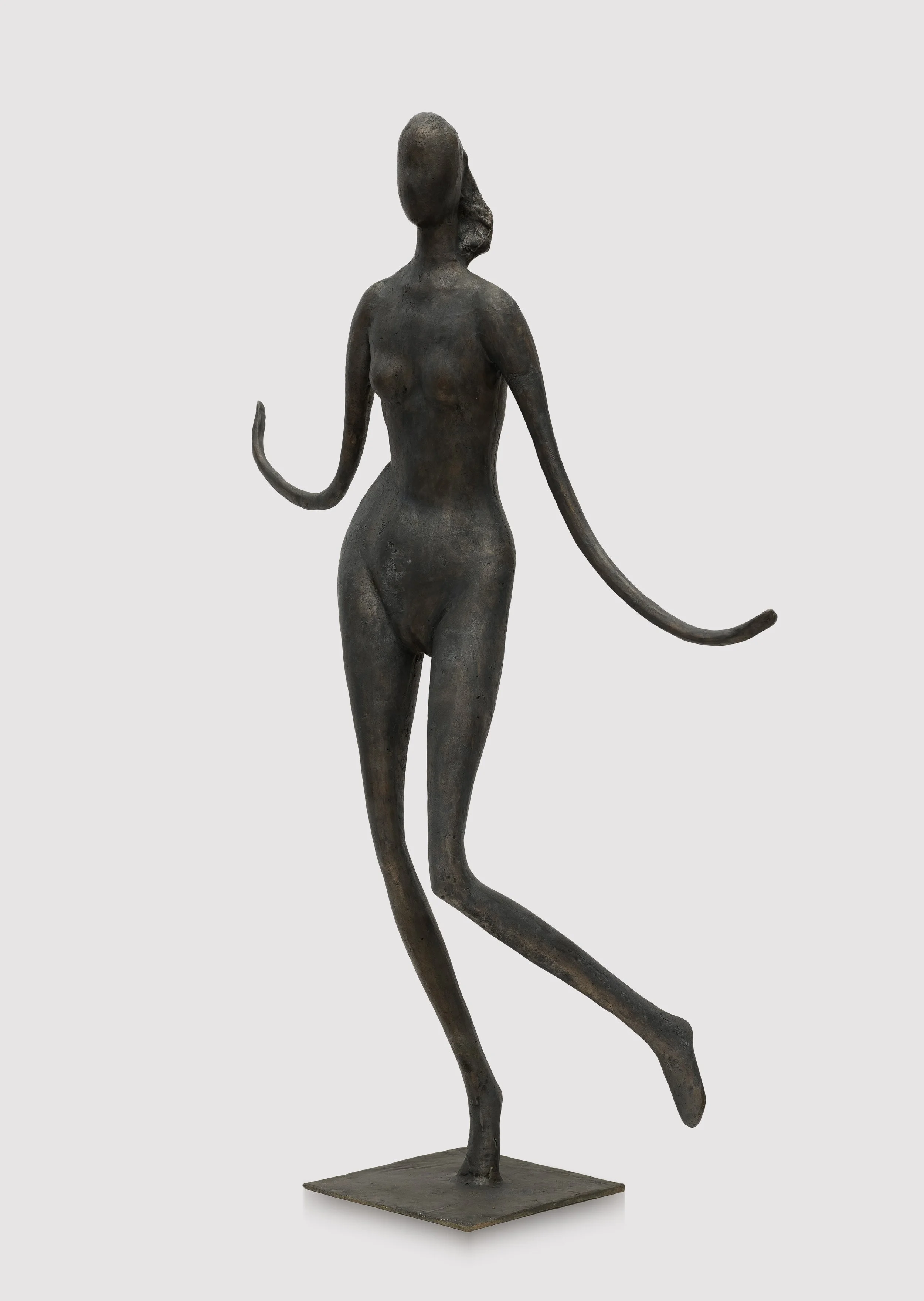
Sarbari Roy Choudhury | Skipping 6/9 | Bronze | 34 x 24.5 x 8.5 in | 1996

Sarbari Roy Choudhury | Down to her knees 2/9 | Bronze | 11.5 x 6 x 3 in | 1963

Sarbari Roy Chaudhury | Appassionata 4/9 | Bronze | 14 x 10 x 8 in | 1995

Somnath Hore | Untitled | Bronze | 7.25 x 7.25 x 3 in
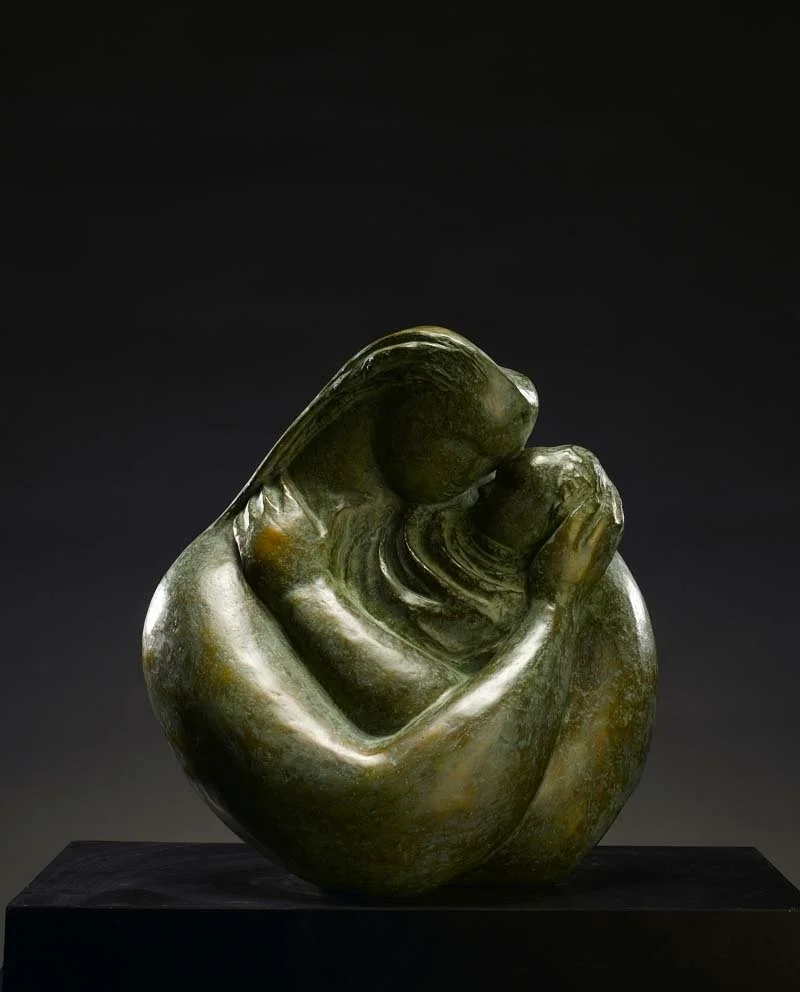
Prodosh Das Gupta | Mother Earth II AC II | Bronze | 10.6 x 7.8 x 11.4 in | 1989

Prodosh Das Gupta | Genesis II | Bronze | 15 x 15 x 29.5 in | 1982

Valay Shende | Teddy Bear (Chrome) | Stainless Steel Discs | 25 x 22 25 in
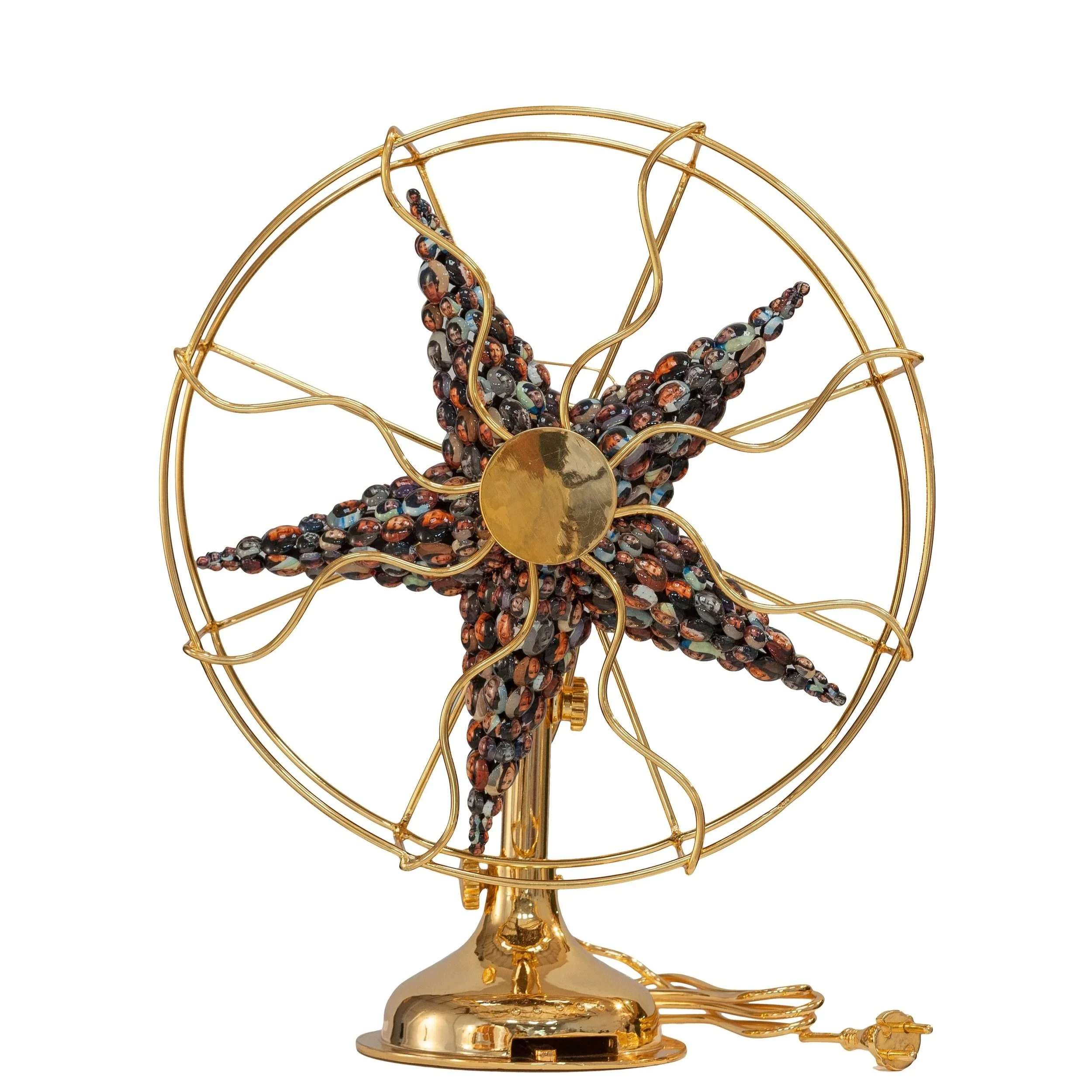
Valay Shende | Star Fan | Gold Plated: Bronze, Aluminium Cast, Copper, Stainless Steel Discs & Mixed Media | 22.5 x 17.5 x 13 in | 2018

Karl Antao | Untitled | Bronze & Wood | 32 x 24 x 11.3 in | 2022
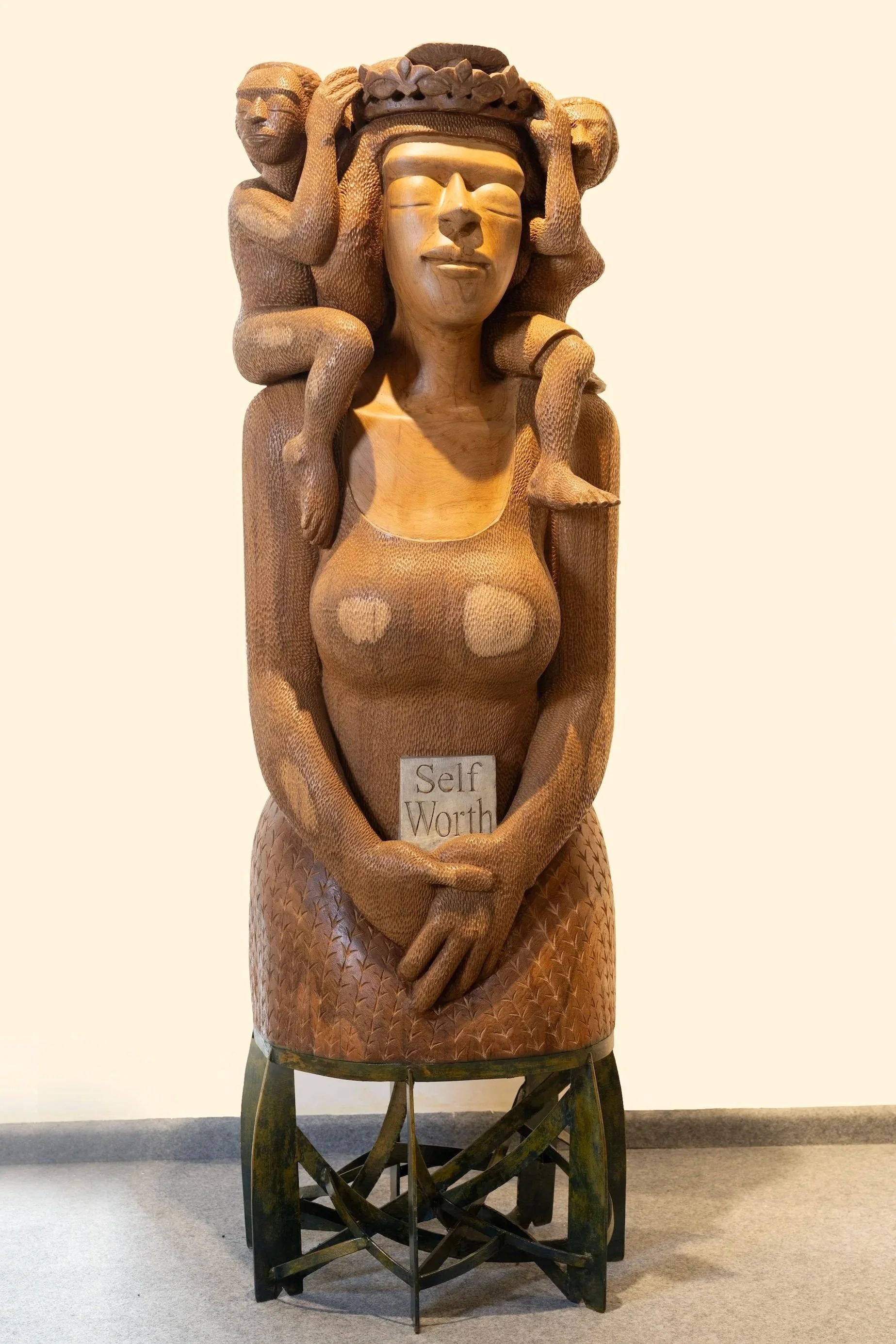
Karl Antao | Saplings of deep rootedness | Burma teak wood | 69 x 23 x 21 in | 2023

Valsan Koorma Kolleri | Mysterious Day 10 | Glass, handmade wooden frame,watercolor on handmade paper and backing with mica sheet with steel screws | 14.5 x 17 in | 2022
Dhruva Mistry | Hear You Are ( Reclining Woman ) | Unique SS304 1.5 mm & Hand Painted Acrylic | 9.6 x 20 x 10 in

Dhruva Mistry | Hanuman : A Spatial Metaphor | Unique SS304 1.5 mm & Hand Painted Acrylic | 22 x 15 x 15 in

Navjot Altaf | With Squirrel | Painted Wood | 14 x 18 x 9 in
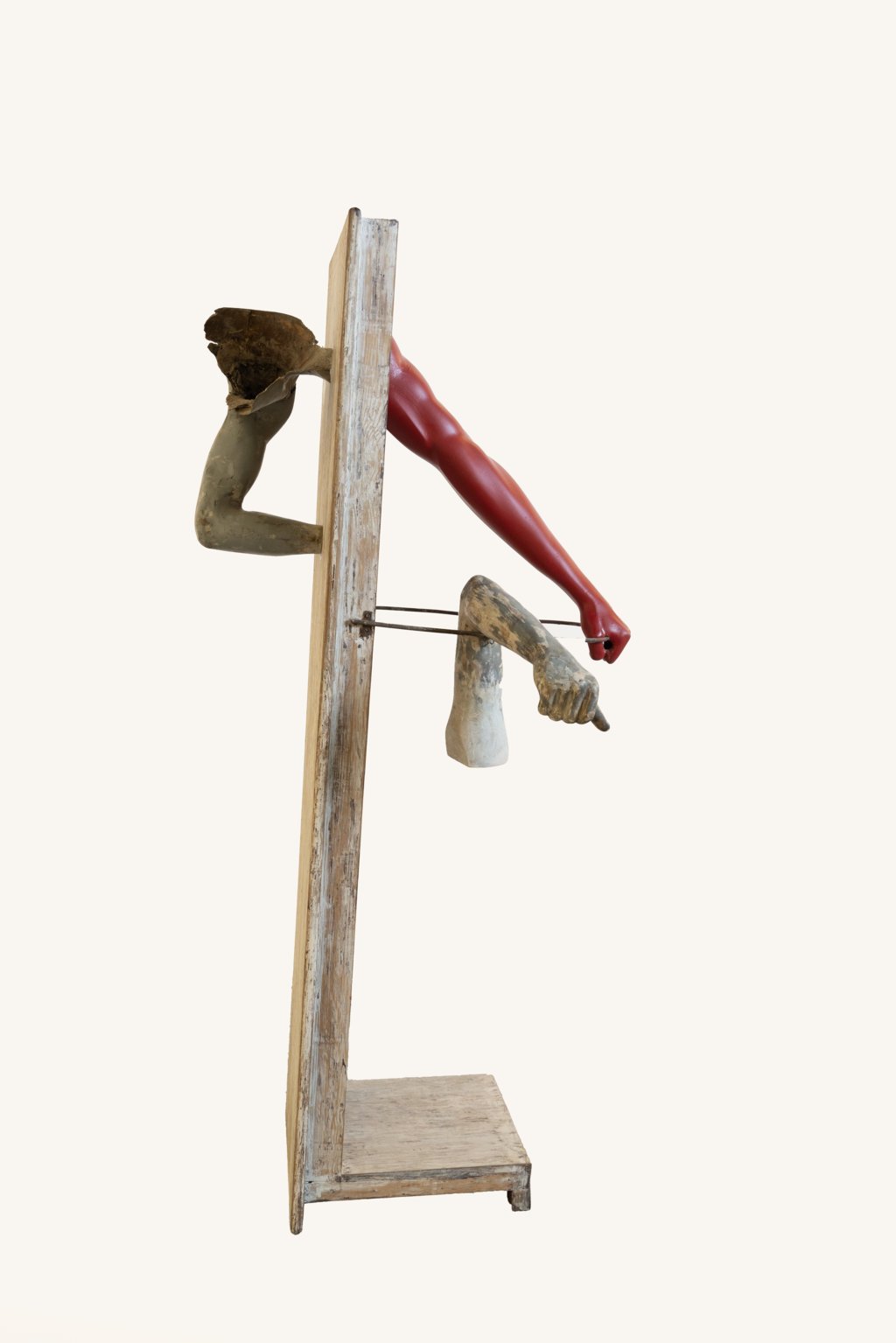
Vivan Sundaram | Three Arms & A Hoop | Wood, Fibreglass & Metal | 60.5 x 31 x 29 in | 2013

Nagji Patel | Untitled | Granite & Metal | 7.25 x 16 x 8 in | 2015
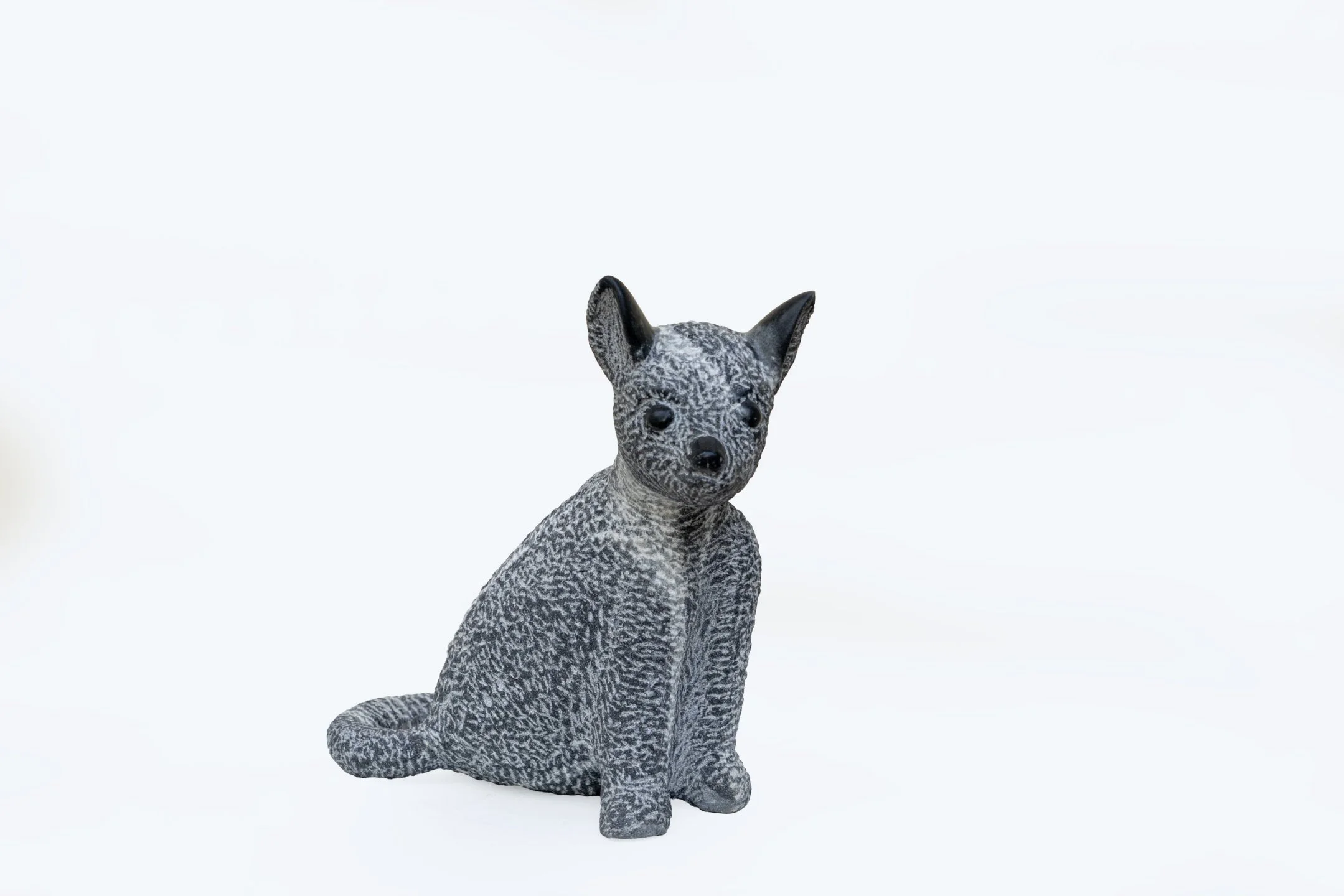
Nagji Patel | Animal 3 | Granite | 13 x 12 x 8 in | 2016
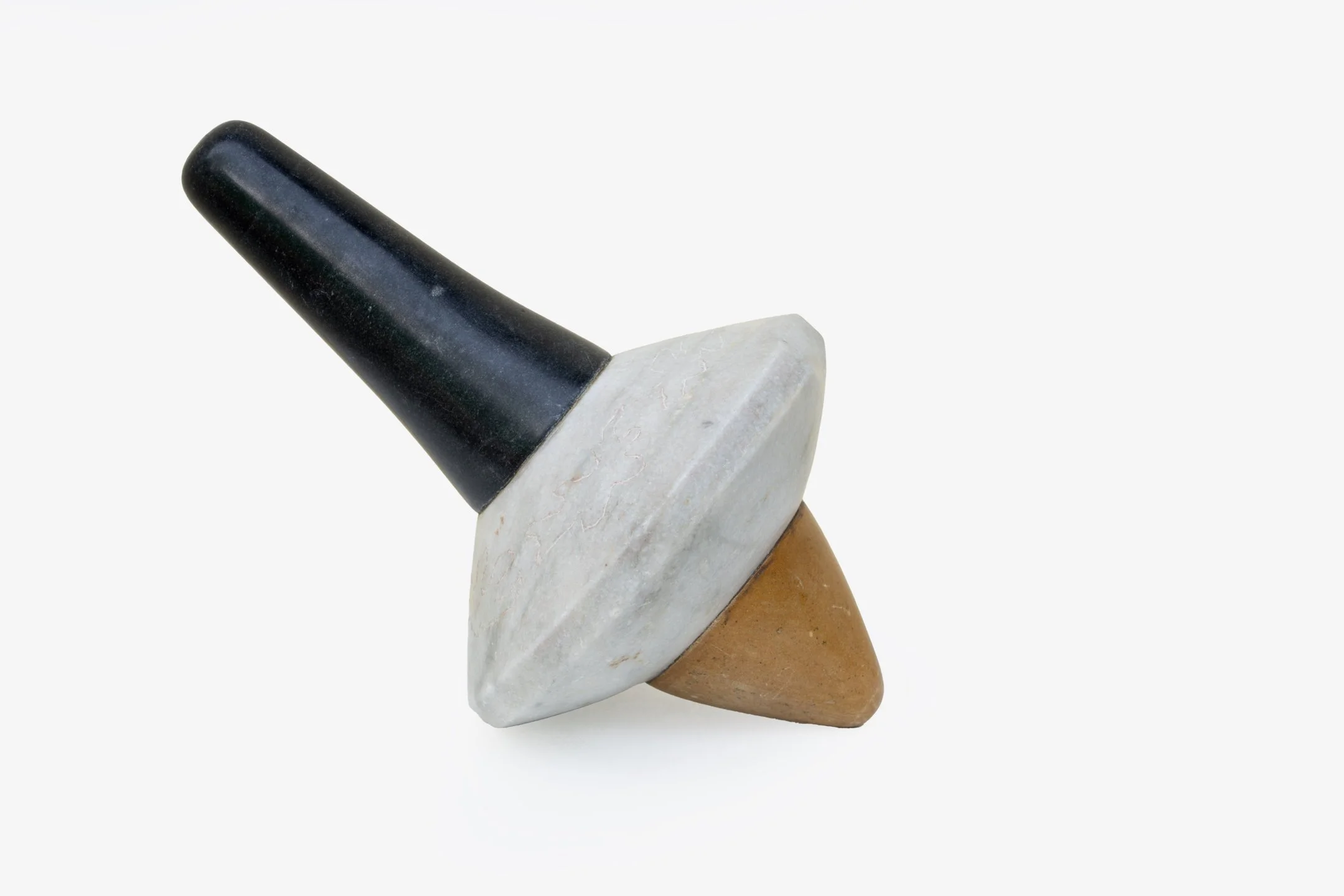
Nagji Patel | Untitled | Black, white & yellow marble | 10.5 x 9.5 x 11 in | 2015

Debasish Mukherjee | The Floating Nights (Set of 3) | Acrylic on Wood | 45 x 10 x 9 in (Each) | 2024

Rajendra Tiku | The Shrine | Bronze | 11 x 9 x 5 in | 2010

Pooja Iranna | Still Standing Strong 3 | 21x18x 8 in | Staple pins | 2025
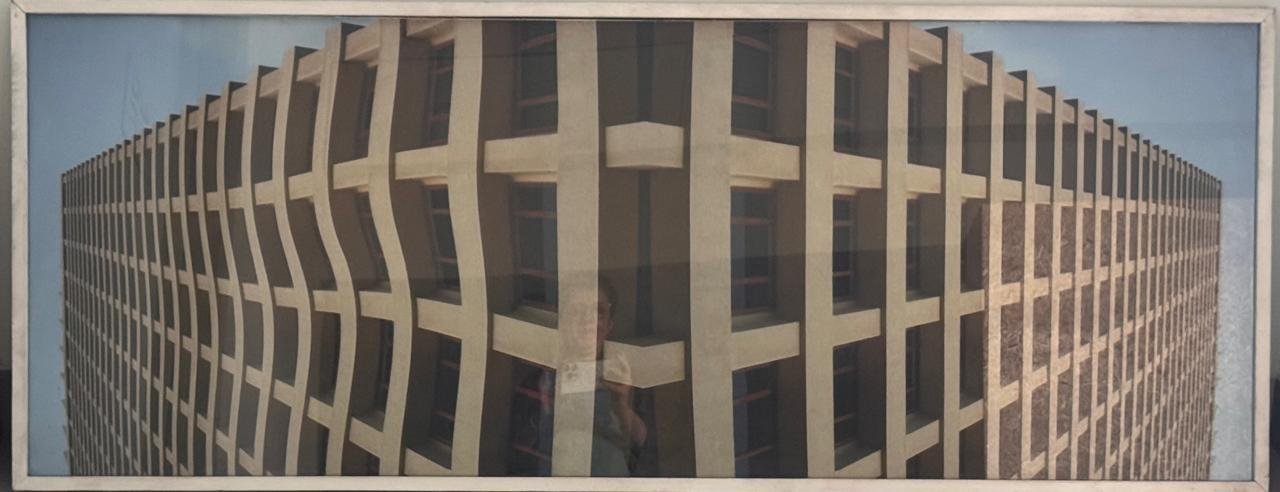
Pooja Iranna | Not so rigid 1 (edition:⅕) | 24 x 64 in | Photographical Print on archival paper | 2013

Saurav Roy Chowdhury | The Hearts Image | Bronze | 16.5 x 9 x 12 in | 2021

Trupti Patel | Homeland on the Mind (Edition Unique) | Ceramic, slip made with earth, ash & oxides of India, epoxy, Tree Bark | 10 x 7 x 7.5 in | 2009

Trupti Patel | Unearthed Affinity ( Edition Unique) | Ceramic (Mixed Minerals, Oxides, Clays of India) , earth | 8 x 10 x 11.5 in | 2007
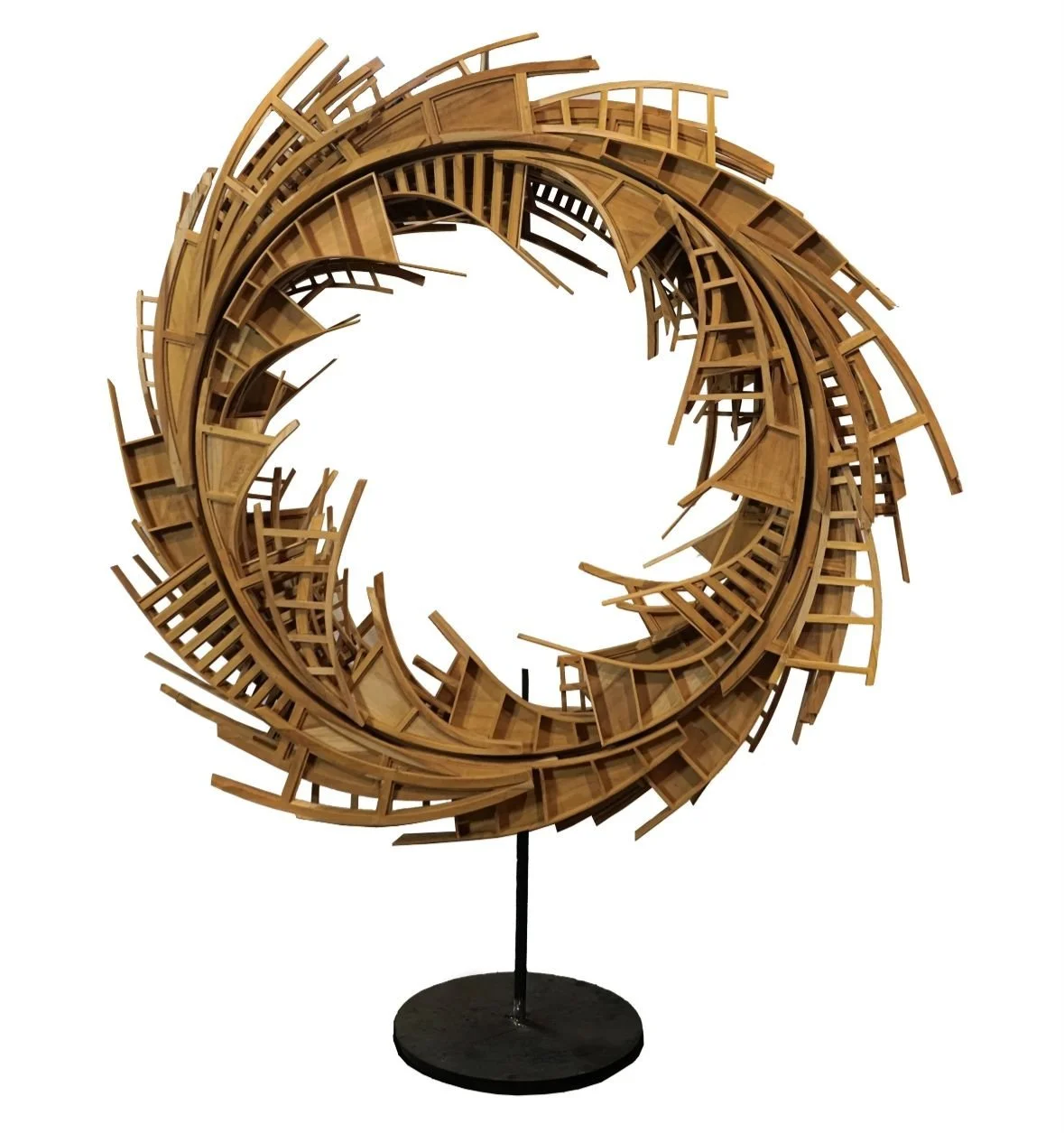
Martand Khosla | Untitled | Metal and wood | 36 in (dia) | 2025
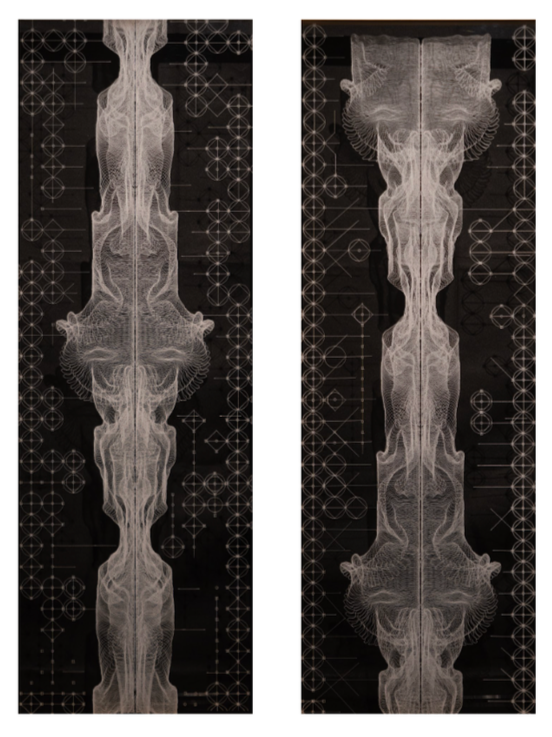
Natasha Singh | Nadi & Field (Diptych) | Plexiglass | 16 x 48 in | 2025
Prodosh Das Gupta (1912 - 1991)
Born in Dhaka, (now Bangladesh), in 1912, Prodosh graduated from Calcutta University in 1932. He studied sculpture at the Lucknow School of Arts and Crafts, 1932-33, and received a Diploma in Sculpture, at the Government School of Art and Crafts, Chennai, 1934-37. Between 1937-39, he studied sculpture at the Royal Academy of Arts, London, and at the Ecole de Grande Chaumiere, Paris; and studied bronze casting at LCC Central School, London.
In 1943 he organised and co-founded the Calcutta Group of painters and sculptors. In 1950, he was appointed as the Reader and Head of Dept. of Sculpture at M. S. University, Baroda. In 1951, he was appointed Professor of Sculpture, at the Government College of Arts and Crafts, Calcutta. In 1955, he was elected as a fellow of the Royal Society of Arts, London. In 1957, he joined the National Gallery of Modern Art, New Delhi as the Director. Between 1957-70, he served at the Lalit Kala Akademi in its General Council and Executive Board.
In 1960, Prodosh was elected president of the Third International Association of Arts (UNESCO) Congress, Vienna, and functioned as an executive board member for three years. He travelled to Czechoslovakia, Poland and East Germany on the invitation of the respective governments to meet artists, and visit galleries and museums in each of the countries.
In 1969, he published a book of poems – “Fallen Leaves”, and in 1970 retired from the post of Director, at the National Gallery of Modern Art, New Delhi. Several posthumous shows on the artist have been mounted in the recent past, including an exhibition with the Ministry of Culture at the Lalit Kala Akademi, New Delhi, Chennai, 2012; and at the Victoria Memorial Hall, Kolkata.
Somnath Hore (1921 - 2006)
Somnath Hore was born in 1921, Chittagong (now in Bangladesh). He received a diploma in printmaking from the Government College of Art and Craft in Calcutta while being closely associated with the Communist Party. He went on to carry out visual documentation and reportage of the Bengal famine in 1943 for the Communist Party magazine Jannayuddha (People's War). Socialist ideologies formed around the Tebhaga movement in 1946 in Bengal influenced the early phases of his artistic career. By the 1950s he was regarded as one of the premier printmakers in India and headed the Graphics and Printmaking Department at Kala Bhavana in Santiniketan, after returning from Delhi where he was in charge of the Printmaking Department of the Delhi Polytechnic in 1958.
He showcased his works in numerous national and international exhibitions including the Venice Biennale, Italy in 1962 and the Sao Paolo Biennale, Brazil in 1963 to name a few. The ‘wound series’ that he started making in the late 1960s as a response to the Naxalite movement and the social unrest around the world, was a unique technique of prints on paper pulp. By the mid-1970s, he turned to wax modelling, subsequently which was transferred to bronze. He was awarded the Lalit Kala Ratna Puraskar by Lalit Kala Akademi, New Delhi in 2004. The National Award (Painting) by Lalit Kala Akademi in 1960, and the National Award (Graphics) by Lalit Kala Akademi in 1963. He was honoured as Professor Emeritus at Kala Bhavana, Santiniketan in 1984. In the same year, he was awarded the Gagan-Aban award in Kolkata. Somnath Hore passed away in 2006 at the age of 85 in Santiniketan.
Meera Mukherjee (1923 - 1998)
Born in Calcutta in 1923, Meera Mukherjee drew her inspiration for her art from the common man. Ordinary people doing everyday things found a manifestation in her art. Fishermen, weavers, women stitching - had all been subjects for her work. Meera was a painter as well as a sculptor. In the latter field, she developed her unique technique for making wax sculptures. Bengali calligraphy also often found its way into her work. And, music and dance were her favourite subjects. Through the years, she was actively involved in the research of folk metal castings and the casting techniques of classical Indian sculptures.
Meera Mukherjee initially studied painting at ISOAS, Kolkata but switched to sculpture at the College of Art, New Delhi (then a department under Delhi Polytechnic). Her European sojourn with its diverse art forms, both ancient and modern, opened her eyes to the suitability of one’s own culture as a personal idiom. It was then that she lived with the tribes in Bastar, Madhya Pradesh, India and Dhokra(West Bengal), where she learned the lost wax casting technique. With her studies of bronze casting in Chennai, she developed her own technique which is an amalgam of the folk, South Indian and the Western method. Her close contact with the rural world crystallized in her sculptures as women repairing fishing nets, stitching and embroidering, grading wheat and generally toiling away. Her imagery also includes objects from myth and folklore, refer lost-wax process, cire perdu, and casting.
There are two distinct features that represent the spirit of Meera's work. The first is the celebration of humanism and the other is an ardent desire to break free from a routine and enjoy freedom.
Sarbari Roy Choudhury (1933 - 2012)
Born in Ulpur, East Bengal (now Bangladesh), Sarbari Roy Choudhury graduated in Sculpture from the Government College of Art & Craft, Calcutta; and the Faculty of Fine Arts, Baroda. During his study tour in Europe, Roy Choudhury visited Paris and Italy and was able to meet two great masters, Alberto Giacometti and Ossip Zadkine, who appreciated his small bronzes. He studied sculpture at the Accademia di Belle Arti, Florence, Italy; and interacted with Marino Marini and Henry Moore. Following his return to India, he joined the Department of Sculpture at Visva Bharati University, Santiniketan.
Roy Choudhury was a connoisseur of Hindustani and Carnatic classical music and collected rare albums and recordings. His interest and engagement with music are evident from his portraits of renowned singers depicted in the act of performance, such as the intensely animated facial expressions of Ustad Bade Ghulam Ali Khan (1971) and Siddheshwari Devi (1964).
He had many solo and group exhibitions in India and overseas, including a show at the Paris Biennale in 1965. His last exhibition was held posthumously under the Ministry of Culture, along with the Lalit Kala Akademi, in 2012. His works are part of the collections of the National Gallery of Modern Art, New Delhi, and at The Madam Shenue Museum, Florence, Italy, besides many private collections across the world. A major publication on his work was released by the Lalit Kala Akademi, Ministry of Culture, in 2008.
The artist passed away in Kolkata in February 2012.
Nagji Patel (1937 - 2017)
Born in Gujarat to a family of farmers, this artist's early years were spent crafting clay toys alongside other village children, sparking a lifelong passion for sculpture. Initially enrolling in the painting course at the Faculty of Fine Arts, M.S. University in Baroda, he soon shifted to sculpture, finding it a more intuitive medium. He earned his M.F.A. in sculpture in 1964, the same year he received a travelling scholarship from the Government of India. This opportunity allowed him to visit quarries across the country, where he engaged with stone carvers, deepening his understanding of the material and its possibilities.
Patel's sculptures are distinguished by a unique interplay of polished and rough stone surfaces, a technique inspired by the historical sculptures of Badami and Mahabalipuram. In these ancient works, centuries of human touch have polished certain areas, while others remain in their natural state. Patel adopted this approach in his own work, creating pieces that invite both visual and tactile exploration. He was particularly drawn to carving, enjoying the sensuous qualities of marble, the warmth of sandstone, and the textured surfaces of granite and wood. This sculptural sensibility also extended to his printmaking, where he infused a three-dimensional effect.
Throughout his career, Patel received numerous accolades, including the Gujarat State Award (1962-64), the Lalit Kala Akademi National Award (1976), the Gaurav Puraskar (1997), and the Aditya Vikram Birla Kala Shikhar Puraskar (2011). His sculptures are installed in prominent locations worldwide, including Seoul Olympic Park in Korea, Arandjelovac in Serbia, the Noguchi Museum in Japan, and various sites in Baroda, where he built his career. Patel passed away on December 17, 2017, leaving behind a legacy of work that continues to resonate globally.
Vivan Sundaram (1943 - 2023)
Born in 1943 in Shimla, Vivan Sundaram studied painting at M.S. University, Baroda, and the Slade School of Fine Art, London. With a diverse practice across sculpture, painting, installation, photography and video, he has had solo shows around the world, including New York, Chicago, London, Paris, Toronto, Montreal and Copenhagen.
The Tate Modern opened an exhibit titled Memorial 1993–2014, featuring a room-sized installation of Sundaram’s work in 2023. His last solo exhibition, GAGAWAKA + Post-Mortem (2015), engaged the audience in a compelling dialogue around material, fashion, ecology, body image and the idea of ageing. He has exhibited his work at important international venues, including the Sharjah Biennale (2023, 2005); Kochi Biennale (2023, 2012); Sydney (2008); Seville (2006); Taipei (2006); and Shanghai (2004), among others, and has several museum participations, including the Tate Modern, London; the International Centre for Photography, New York; Queens Museum, New York; the Mori Art Museum, Tokyo; Haus der Kunst, Munich; Museum of Modern Art Ludwig Foundation, Vienna; Chicago Cultural Centre, Chicago; the Museum of Modern Art, Copenhagen; and Haus der Kulteren Welt, Berlin, to name a few.
In 2010, the book Amrita Sher-Gil: A Self-portrait in Letters and Writings, edited and annotated by Vivan Sundaram, was published by Tulika Books, Delhi.
The artist passed away in 2023 in New Delhi.
Navjot Altaf (b. 1949)
One of India’s leading contemporary artists, Navjot Altaf is a major artistic voice in postcolonial Indian art. Her work is known both nationally and internationally and her nearly five-decade-long practice involves painting, sculptures, installations, video and site-specific works that negotiate various disciplinary boundaries.
She is one of the founder members of the centre Dialogue: Interactive Artists Association, Kondagaon, Chhattisgarh. She has organised seminars/discussions at Samvad 1 (2007), Samvad 2 (2011), Samvad 3 (2015), and Samvad 4 (2019), at DIAA.
Navjot’s work has been written about and curated by some of the art world’s best, including Roobina Karode, and Nancy Adajania, who has written a definitive study of her practice – The Thirteenth Place: Positionality as Critique in the Art of Navjot Altaf – placing it in multiple art historical and political contexts. A two-volume publication Navjot At Work was published in 2022 with essays by Geeta Kapur, Elena Bernardini, Grant Kester, and Leon Tan.
Her numerous solo exhibitions in and outside India and her participation include Disobedience Archive, curated by Marco Scotini, 17th Istanbul Biennial, 2022; Navjot Altaf: Pattern, Ishara Art Foundation, Dubai, 2022; Cognitive Processes: Imagining Ecological Democracy, The Guild, Alibaug, 2022; Samakaalik: Earth Democracy and Women’s Liberation, PAV Parco Arte Vivente, Turin, Italy, 2019; Flight Interrupted: Eco-leaks from the Invasion Desk, Karachi Biennale, 2019; Open Borders, Curitiba Biennial, Brazil, 2019; the 2nd Chennai Photo Biennale, India, 2019; The Earth’s Heart, Torn Out, Navjot Altaf: A Life in Art - A Retrospective, National Gallery of Modern Art, Mumbai presented by The Guild, 2018–2019; How Perfect Perfection Can Be, The Guild, Alibaug, 2015.
Navjot Lives and works in Mumbai and Bastar, India.
Rajendar Tiku (b. 1953)
Born in Wadwan, Kashmir, Tiku graduated from Kashmir University with a major in Science and Law in 1978 and 1976. He also completed his sculpture course from the Institute of Music and Fine Arts, Srinagar in 1978. Tiku became the founder secretary of 5. P. College Artists’ Association. Tiku has received many awards and honours such as the Pollock-Krasner Foundation Grant (New York) for one year of advanced work in Sculpture, 2005; 8th Triennale-India (International) award for Sculpture, 1994; National Award for Sculpture, 1993; Senior Fellowship of the Department Of Culture, Ministry of Human Resources Development, Govt. of India, 1997-99.
He has been invited to numerous sculpture workshops in Switzerland, Israel, Russia, Egypt, Thailand, Cambodia and Turkey. In 2013, the Government of India honoured Rajendra Tiku with the fourth highest civilian award, Padma Shri.
Tiku has taken part in many solo exhibitions including Metaphors in Matter, Gallery Espace, New Delhi (2008); Sculpted Images, Gallery Espace at India Habitat Centre, New Delhi (2003); Art Heritage, New Delhi (2003 & 1998); ABCFoundation, Varanasi (1998); Art Heritage, New Delhi (1995); Art Heritage, New Delhi (1992 & 1990); 7th and 8th Triennial, India. India Reflections, in Artibus Foundation, Moscow 2022. The artist lives and works in Kashmir.
Valsan Koorma Kolleri (b. 1953)
Born in 1953, in Pattiam, Kerela. He studied at the College of Art and Crafts, Chennai, in 1976; Faculty of Fine Art, M.S. University, Baroda, 1979; and Ecole Nationale Superior Des Beaux Arts, Paris, 1986.
Valsan has had numerous solo exhibitions at ‘New Clearage: Retrospective as Artwork’, Talwar Gallery, New York, 2007. ‘Retrospective as Artwork’, Colab Gallery, Bangalore, ‘Retrospective as Artwork’, B.Q. Gallery, Koln, Germany, 2005. ‘Drainage: Rain Harvesting Sculpture’, Khoj, Delhi ‘Retrospective as Artwork’, Project Gallery, Dublin, Ireland, 2004 ‘Draw’, National Institute of Design, Ahmedabad, 2003. ‘Draw’, Art Inc. Gallery, Delhi ‘Sculpture Show, Egmore Museum, Chennai, Alliance Francaise, Bangalore. ‘Sculpture Age’, Pundole Art Gallery, Mumbai, 1998. ‘Bronze Age’, Center for Contemporary Art, Delhi, 1990. ‘Stone Age and Bronze Age’, British Council Gallery, Chennai, 1989. 1986 ‘This Time Ceramics’, Sakshi Gallery, Chennai, 1986.
He was awarded the 6th Bharat Bhavan Biennale of Indian Contemporary Art Prize, in 1996; the National Academy Award, Lalit Kala Akademi, Delhi, 1990; the French government scholarship to study at Ecole Nationale Superieure Des Beaux Arts & to work as a resident artist at The Cite Des Art, 1986 and the Kerala Lalit Kala Academy Award, Kerala, 1983.
Turning loss to his advantage, he creates a theatre where these things are reinstated, pending further use; by virtue of their relationship to their surroundings, they encompass a space which far exceeds their immediate limits. Kolleri has an affiliation with working processes which marginalizes any message that stands apart from the act of putting a piece together. As he asserts, concept apart, the placement of the object or the angle of inclination which it finally assumes is the sculpture, the instant of intervention creating a value hitherto nonexistent.
He runs the Shilpapaddiam a centre for sculpture in Pattiam, Kerala.
Dhruva Mistry (b. 1957)
Born in 1957 in Gujarat, Dhruva Mistry is a prominent Indian sculptor whose work spans from small-scale domestic pieces to monumental public commissions. He studied sculpture at M. S. University of Baroda and later at the Royal College of Art in London. Drawing inspiration from both ancient and modern civilizations, Mistry explores cultural tensions through a variety of materials and genres. His sculptures, often metaphorical, draw on themes from myth, literature, and religion, while maintaining a contemporary perspective. Mistry emphasizes that his work, while rich in symbolic imagery, is grounded in his observations of the world rather than religious iconography, focusing on the essential qualities of form—texture, beauty, and shape.
Best known for his stainless-steel freestanding sculptures, Mistry is recognized for his exploration of materiality, particularly in terms of contrast and scale. His recent exhibitions have also highlighted his Digital Drawings, a project he has developed since the mid-1990s. These drawings feature shapes, images, and silhouettes of relief sculptures, reflecting his interest in the interplay between pictorial forms and space, as well as the relationship between parts and whole forms, rendered through lines and colours.
Mistry has held several solo exhibitions, including ‘At The Turn Of Form’ at Akara Contemporary, Mumbai (2023), and ‘New Work 1999 - 2019: Dhruva Mistry’ at Akara Art, Mumbai (2019). His work has been featured in other significant exhibitions, such as 'Dhruva Mistry: The Human Abstract' at Jhaveri Contemporary, Mumbai (2016), and 'Something Else' at Sakshi Gallery, Mumbai (2014). Mistry's public art sculptures are installed in notable locations like Victoria Square in Birmingham, Goodwood in Sussex, the Yorkshire Sculpture Park, and the Hakone Museum in Japan. The artist lives and works in Vadodara.
Trupti Patel (b. 1957)
Trupti Patel, born in 1957 in Nairobi, Kenya, is a distinguished sculptor who has made significant contributions to the field of ceramic sculpture. She pursued her studies in sculpture at the Faculty of Fine Arts, M.S. University of Baroda, and later specialized in Ceramic Sculpture at the Royal College of Art, London, with scholarships from the British Council and Charles Wallace. Trupti's early artistic journey was deeply rooted in the use of clay and earth, materials symbolically linked to the cycle of life. She explored themes of human existence and our intrinsic connection to the earth, crafting life-size terracotta heads and figures, predominantly female, that captured the essence of life's experiences through intuitive and gestural forms.
As her practice evolved, Trupti began to explore the profound relationship between material and meaning. Her understanding of the inherent symbolism in raw soil, with its organic ties to location and geography, led her to experiment with other materials that carried their own unique narratives. This shift allowed her to engage more deeply with concepts of identity and place, themes that have become central to her work. Her significant solo exhibitions, such as "Places.Earths.Identity" at Gallery Sumukha, Bangalore (2020), and "Individual/Society/Clay Initiatives" at India Habitat Centre, New Delhi (2011), among others, have highlighted her continued exploration of these ideas.
Trupti Patel's works are held in prestigious collections, including the Victoria and Albert Museum, the Shigaraki Ceramic Sculpture Park, the Birmingham Museum, and the Chelmsford and Essex Museum, among others. She has been recognized with several awards, such as the Charles Wallace India Trust Award (1984) and the British Council Award (1983). Currently, Trupti lives and works in Vadodara, Gujarat, where she continues to create art that resonates with the themes of identity, materiality, and human connection to the earth.
Karl Antao (b.1966)
Karl Antao, born in 1966 in Mumbai, is a distinguished artist known for his remarkable ability to breathe life into cold blocks of wood. A graduate of the Sir J.J. School of Applied Arts in 1991, Antao transitioned from a successful career in advertising to pursue his true passion for sculpture. This shift was driven by his desire to bridge the gap between a designer's vision and the final form, bringing forth creations that resonate deeply with human emotions. His work primarily involves wood, a medium that challenges him to infuse stillness with dynamic expression. Occasionally, he also works in bronze, further expanding his artistic range.
Antao's sculptures are monumental, both in scale and emotional depth. He skillfully transforms his chosen materials into complex visual metaphors that convey a wide spectrum of human experiences. His work is characterized by a profound dialogue between the medium and the emotions he seeks to express, resulting in pieces that are not only visually striking but also emotionally charged. Each sculpture stands as a testament to his mastery of form, texture, and emotion, making his creations resonate on both a physical and emotional level.
Over the years, Antao has been recognized for his contributions to the art world with several prestigious awards. These include the Indian Habitat Award for Best Solo Show in 2005, the Bendre-Husain Award in 1995, and the Bombay Art Society Award in 1993. He has also been honoured with a silver medal from the Government of Maharashtra, further cementing his reputation as one of India’s leading sculptors. Antao's work continues to captivate audiences, offering them a powerful and immersive experience through his evocative sculptures.
Pooja Iranna (b. 1969)
Born in Delhi in 1969, Pooja Iranna trained in painting at the Delhi College of Art, where she completed both her Bachelor’s and Master’s degrees. In 2002, she received the Charles Wallace India Trust Award, and in 2010 she was selected as a finalist for the Celeste Prize in New York — early recognitions that affirmed her evolving artistic language.
Although academically rooted in painting, Iranna gradually developed a practice that engages deeply with materiality and the built environment. Her works — spanning drawing, video, and her well-known staple-pin constructions — reflect on the textures, tensions, and transformations of contemporary urban life. Over the years, she has held several solo exhibitions, including Silently… A Proposed Plan for Re-Thinking the Urban Fabric (New Delhi / New York, 2020), In the Waves and Underneath (2010), Of Human Endeavor (2009), and Metaphorical Mathematics (2003–04), among others.
Iranna’s art has been featured in major museum and institutional exhibitions in India and internationally, from the Guangdong Museum of Art in China to the Kiran Nadar Museum of Art in New Delhi, the Serendipity Arts Festival in Goa, the Macro Museum of Contemporary Art in Rome, and the Asian Art Biennale in Bangladesh. Her work has been part of projects exploring memory, identity, urban space, and the shifting nature of contemporary experience.
Pooja Iranna lives and works in New Delhi.
Debasish Mukherjee (b. 1973)
Debasish Mukherjee (b. 1973) was born in Chapra, a historically important town in Bihar. He grew up amidst open spaces and railway colonies, mixing freely with people from various social backgrounds. He graduated from the Banaras Hindu University with a specialization in Painting. Rooted in India, Mukherjee manifests his keen observations of India’s built environment, social fabric and events from his day-to-day life into his art practice. Mukherjee’s work tends to interrogate the way an object or memory is preserved, celebrated or neglected.
He has also conducted extensive research with weavers and artisans across India, especially within Uttar Pradesh, Rajasthan, Odisha and Gujarat. He has had solo exhibitions including Whispering Lanes at Akar Prakar, Delhi (2023); River Song, at Akar Prakar, New Delhi (2019) and Museum Within at Akar Prakar, New Delhi (2016). He has also participated in numerous group shows including The Legacy of Loss: Perspective on the Partition of Bengal at Kolkata Centre for Creativity (2021); Multitudes & Assemblages for Hub India at Accademia Albertina di Belle Arti, Turin, Italy (2022); Inner Life of Things: Around Anatomies and Armatures curated by Roobina Karode at Kiran Nadar Museum of Art, Noida 2022); Partition of India…1947 at National Gallery of Modern Art, Delhi (2022); Freedom and Awakening at The Alipore Museum with Kolkata Centre for Creativity (2023) and the India Art, Architecture and Design Biennale at Red Fort, New Delhi (2023) to name a few. His works are in permanent collections such as the Kiran Nadar Museum of Art and The Partition Museum, Delhi. The artist lives and works in New Delhi.
Martand Khosla (b. 1975)
Martand Khosla's (b.1975) art practice explores urban continuity and transformation, as both complement and counter to his experience building in contemporary India. Having founded and run an award-winning architecture studio for over twenty years (Romi Khosla Design Studios). Martand initially pursued art to explore how construction-fueled employment shapes identities and nostalgia. Situated as both participant and observer, he employed tools of the State, such as the ubiquitous rubber stamp, to render its imprint on lives within traditional definitions of power and dispossession. Brick dust collected from his construction sites became a language of tension, allowing the material to pay tribute to both the temporary and permanent, to construction and demolition.
An architect’s natural preoccupation with space inevitably emerges in his work, not as a challenge to ‘build’ – but rather to foreground an object’s intrinsic potentiality. His works traverse the lines between sculpture and object, movement and remnant, material and memory. Inspired by his studies of repetition and the human churning of industrialization, he replicates the micro-processes of macro-construction. And simultaneously, he moves from the lens of authoritarian power to its dispersion, exploring the transformations that lay in between.
Khosla has had solo exhibitions at Nature Morte, New Delhi (2019, 2016); Seven Art Gallery, New Delhi (2012) and Jawaharlal Nehru University, New Delhi (2012). His work was also a part of the State of Architecture, curated by Rahul Mehrotra, Kaiwan Mehta, and Ranjit Hoskote at the National Gallery of Modern Art, Mumbai (2016). Khosla has shown works in several group exhibitions such as 10 Chairs, Gallery Espace, New Delhi (2019); 50 Years After 50 Years of the Bauhaus 1968, Württembergischer Kunstverein, Stuttgart (2018); This Night Bitten Dawn, presented by Devi Art Foundation, New Delhi and Gujral Foundation, New Delhi (2016); In Other Rooms, GALLERYSKE, Bangalore (2015) and Food, SESC, Sao Paulo (2014) amongst others.
Saurav Roy Chowdhury (b.1977)
Born into an artist’s family, Saurav Roy Chowdhury started clay modelling at an early age. Soon after completing secondary school in 1994, he entered Kala Bhavan, the fine arts academy of Visva Bharati University, He did his post-graduation from the same art school in 2001. After completing art school he became a full-time sculptor. His work is characterized by a diverse use of materials such as wax, plaster, concrete, clay, glass, resin, fibreglass, various metals, and occasionally video, which offers a profound reflection on contemporary existence. Best known for refined sculptural explorations of the human body intertwined with organic forms, the artist delves into themes of transcendence, meditation, spirituality, and tragedy. Through these works, they invite viewers to contemplate the deeper aspects of human experience and the world around us.
His major exhibitions include NGMA Gallery, Mumbai, Jehangir Art Gallery, Mumbai, Lalit Kala Akademi, New Delhi, CIMA Gallery, Kolkata, Birla Academy of Art and Culture, Kolkata and Akar Prakar, Kolkata to name a few. Saurav received scholarships from the government of India, the Lalit Kala Akademi scholarship, the National Scholarship, and the Elizabeth Greenshields grant, from Canada.
He has also participated in several art workshops such as the Sculpture Workshop, Ortweinshule, Graz, Austria, the Bronze Casting workshop of Lalit Kala Akademi, Manipur, India, Agder Kusntsenter, Norway, etc. His work has been shown at art biennales, and international art fairs, and his sculpture was sold at Christie’s first art auction in Kolkata in 2008. He has participated in an international artist residency program, Kunstnarhuset messen, Norway, 2017. In 2018, Saurav was chosen as the Artist of Kristiansand, Norway and during that time he worked at Agder Kunstsenter. He has been the recipient of the Birla Academy Award, India, Emami Chisel Art Award, India, Elizabeth Greenshields Grant, Canada, and Kristiansand Kommune Grant, Norway. Saurav lives and works in Santiniketan and Kolkata, India.
Valay Shende (b.1980)
Born in Nagpur in 1980, Valay Shende is a contemporary sculptor and video artist whose early training began with a Diploma in Art Teaching (2000), followed by a Bachelor of Fine Arts in Sculpture from Sir J.J. School of Art, Mumbai (2004). His artistic vocabulary evolved further through international residencies at Point Éphémère, Paris (2006), and Glenfiddich, Scotland (2010), experiences that broadened his engagement with material and form.
Shende is known for his meticulous craftsmanship and his innovative use of stainless-steel discs, mixed media, and video, merging sculptural tradition with technological immediacy. His life-sized installations address the complexities of urban existence—labor, migration, identity, industrialization, and social inequity—placing the human figure at the center of his inquiry.
Over the years, he has received numerous honors, including “Artist of the Year” at the AISL Lumiere Awards (2022), the Hello! Hall of Fame Award (2016), the K.K. Hebbar Foundation Award, and the All India Fine Arts and Crafts Society’s Best Sculpture Award. In 2020, he was the youngest contemporary artist featured in the Hurun India Art List, marking his growing influence in the art world.
Shende’s works have been shown widely across India and internationally, with presentations at the Seattle Art Museum, MAXXI Rome, MAC–Lyon, the Singapore Art Museum, the Taipei Museum of Contemporary Art, and the Kuandu Biennale, among many others. His sculptures continue to resonate for their emotional immediacy and their sharp reflection on the social conditions of contemporary life.
Valay Shende lives and works in Mumbai.
Natasha Singh (b. 1988)
Born in 1988 in Jiroft, Iran, Natasha Singh is an interdisciplinary artist, interested in bridging the ancient practices of art in India and creative technologies. She has worked with computer vision and AI to create a Generative sculpture of Yoga. Her main objective is to investigate the patterns of rhythm and their effects on the body. Her work has been exhibited at Exhibit320 Delhi, Delhi Contemporary Art week 2023, Art Mumbai 2023, Sunaparanta Goa 2023, and Indian Art, Architecture and Design Biennale in Delhi, 2023, VHC Pune 2024, Akar Prakar Delhi 2024, and Amarapali Museum for Jaipur Art Week 4th Edition 2025. She spoke at notable platforms such as EyeMyth festival, Future conference 2024, and TEDx.
Through her work, she is visually exploring the role of repetitions in movement and the emergence of patterns, with an unfurling of an underlying structure. The works are of an Interdisciplinary nature, translating temporal qualities of elements to their spatial constructions, keeping the idea of time as a personal experience. Her work is algorithmic in its making. A merge of technology and artistic expression is at the core of her work, to analyse and exhibit rhythm in practices which are culturally driven and embed historic traditions. Implementations of her artistic expressions are generated as images, video, sculpture, sound, and kinetic art.