
Becoming
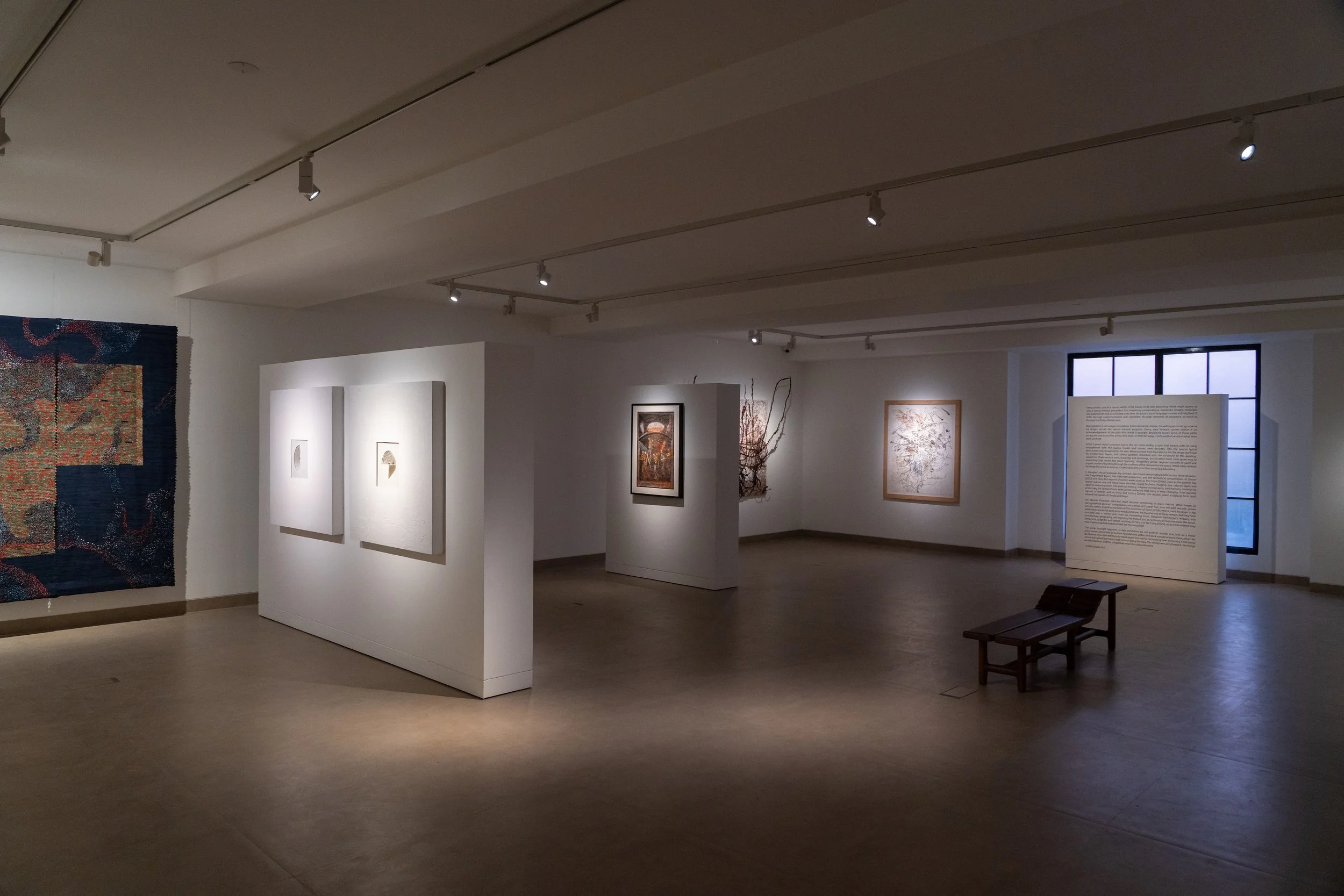
August 22 - September 17, 2026 at Akar Prakar, New Delhi
Every artistic practice carries within it the traces of its own becoming.
What might appear as new is rarely without precedent; it is shaped by conversations, memories, images, materials, and experiences that accumulate over time. An artist's visual language is never entirely fixed. It shifts through experimentation and repetition, through moments of departure as much as through the things that remain.
But evolution is not only accumulation. It also demands release, the willingness to let go of what no longer serves the work's natural progress. Every step forward carries within it an acknowledgement of the path that made it possible. Becoming traces some of these paths across the practices of six artists who have, in different ways, continued to transform what their work can hold.
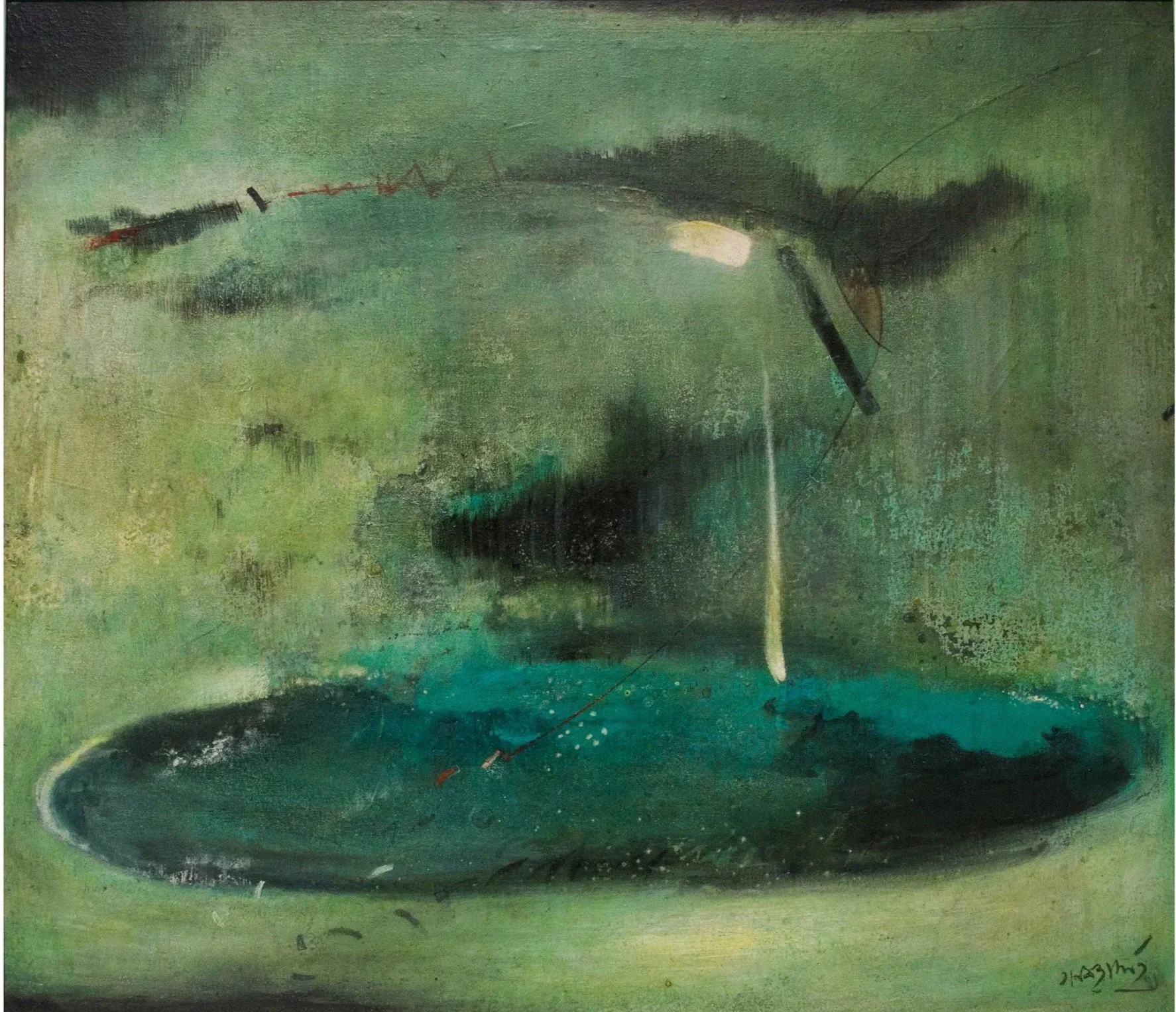
Artist Ganesh Haloi's practice traces this arc most visibly, a path that begins with his early engagement with the Ajanta murals and moves, over decades, into the sparse lyrical abstraction now recognised as his own. What survives from figuration is not the image itself, but its architecture, layers, and colour palettes absorbed into the structure of the painting. Jayashree Chakravarty's early drawings and paintings, on the other hand, have given way to something that resists the word "painting" altogether. Dense, layered surfaces of paint and organic material bursting through the confines of the canvas into the space. While Haloi relieves an image for lyrical structures, Chakravarty lets go of the canvas as a boundary.
C. Douglas's visual language, by contrast, has stayed remarkably legible across three decades: the fragmented figure, the distorted proportion, and the fantastical compositions of Dream (2023) still carry the imprint of earlier works such as The Circle (1996), even as the palette has grown sparser and the mood more distilled. Leang Seckon's imagery, too, returns again and again to shared ground. The political history, religious iconography, and memory continue to preoccupy his compositions even as the materials that carry it keep changing, from painted canvas to leather, and, in Unity and Victory (2026), into double-sided sculptural form built around the figures of Garuda and Naga.
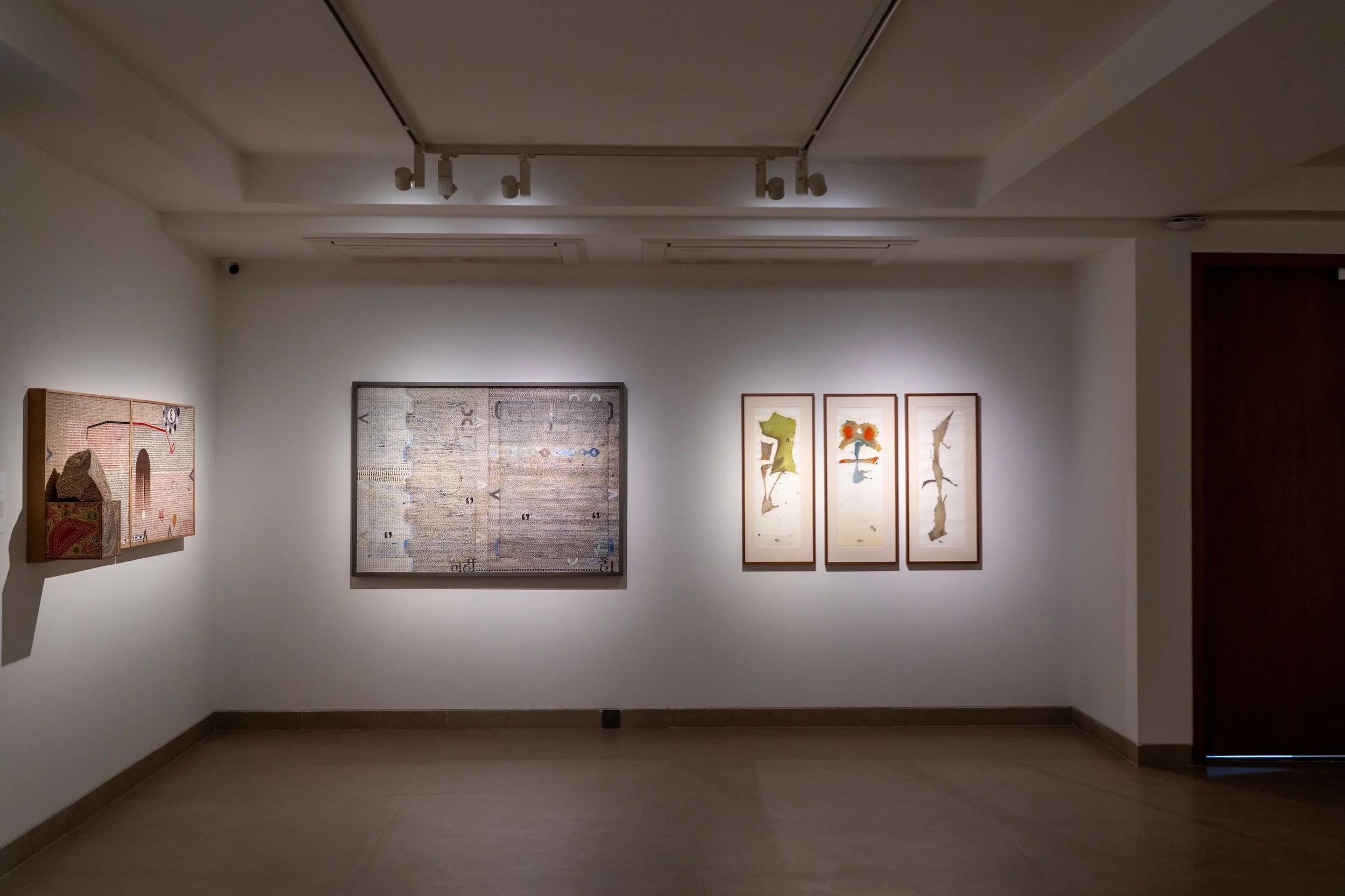
For Manish Pushkale, restraint itself became something to leave behind. What began as cartographical abstract compositions on canvas and paper has, over the past decade, grown into the dense, engulfing surfaces of The Grammar of Stone (2026), where paint no longer stays within the canvas but spills onto wood and stone. His foundations of study remain, but they have mutated into a bolder and more all-consuming form. Debasish Mukherjee's enquiry into architecture, geography, and memory has moved just as restlessly across materials like wood, terracotta, graphite, and textile, arriving, in The Land We Carry (2026), at an embroidered map that is both engulfed and dissolved like memory itself.
The works brought together in this exhibition do not present artistic practices as a linear progression. Some hold on to their foundations and let the work mutate around them; others let go of what once defined them to make space instead for something new. Becoming is not about arrival but about the traces that remain along the way. The things we carry forward, the things we leave behind, and the things that return to us transformed.
- Siddhi Shailendra
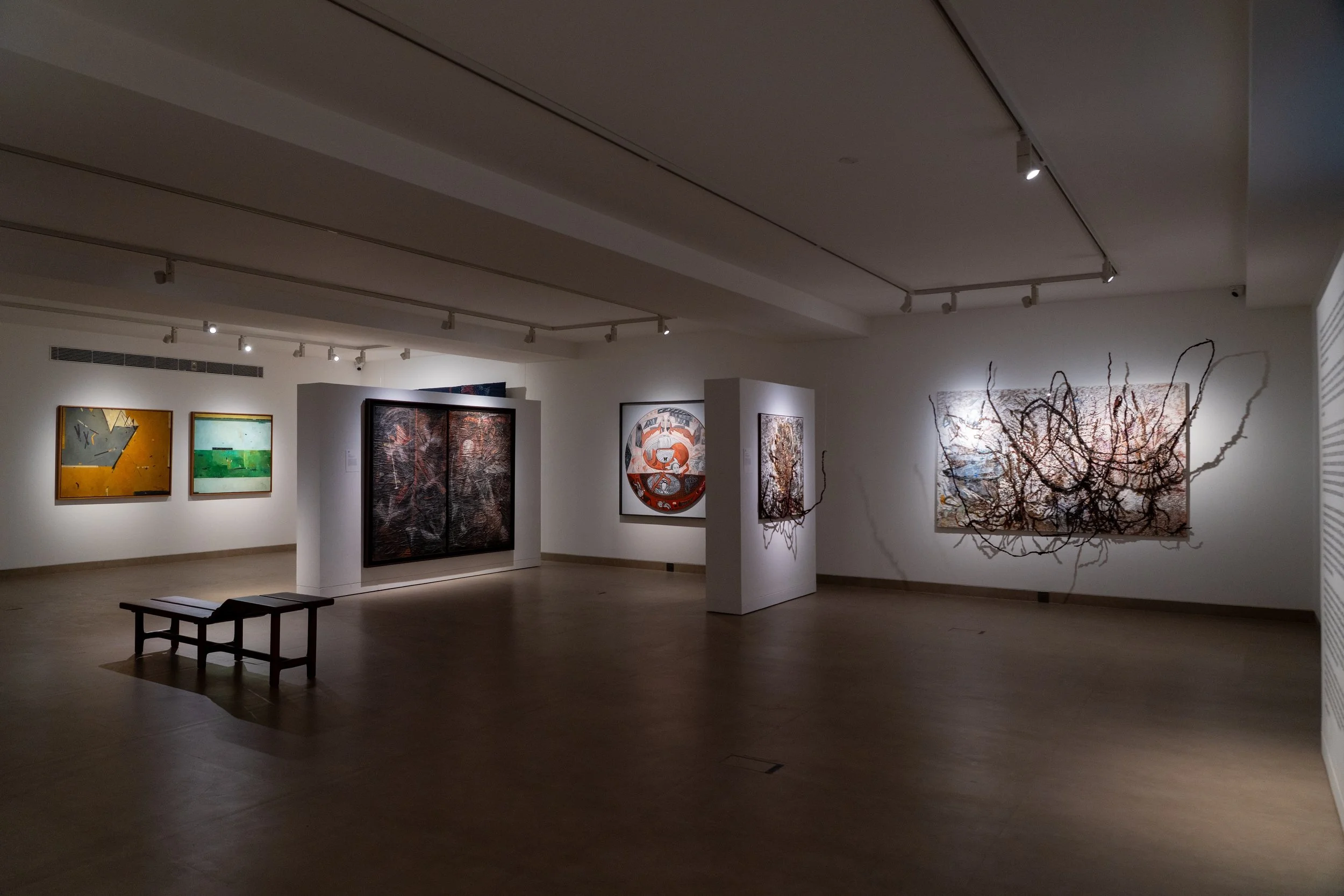
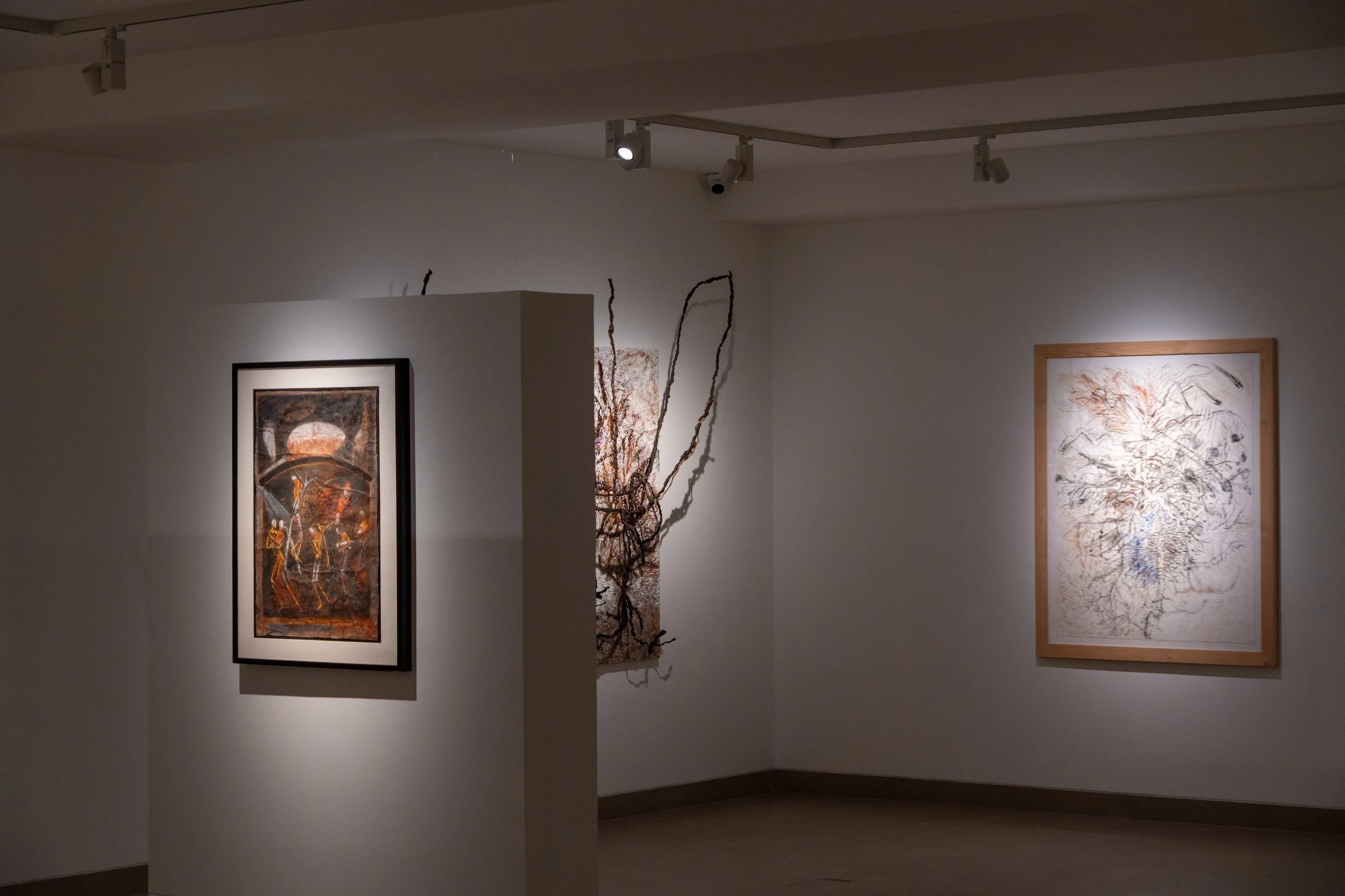

C.Douglas | Dream | Mixed Media on Board | 47.5 in dia | 2022

C.Douglas | Untitled (Diptych) | Mixed Media on Paper | 60 x 78 in | 1995

Debasish Mukherjee | Untitled | Wood, Terracotta & Acrylic Paint | 40 x 40 x 4 in | 2015

Debasish Mukherjee | Untitled | Wood, Terracotta & Acrylic Paint | 40 x 40 x 4 in | 2015
Ganesh Haloi | Untitled | Oil on canvas | 27 x 30 in | Late 1960s

Ganesh Haloi | Untitled | Oil on canvas | 40 x 43 in | 2023

Ganesh Haloi | Untitled | Oil on canvas | 40 x 48 in | 2021

Jayashree Chakravarty | Untitled | Mixed Media on Paper | 45 x 32.5 in | 2020

Jayashree Chakravarty | Transformation | Oil, acrylic, organic material, glue and wire on canvas | 36 x 35 x 14 in | 2026
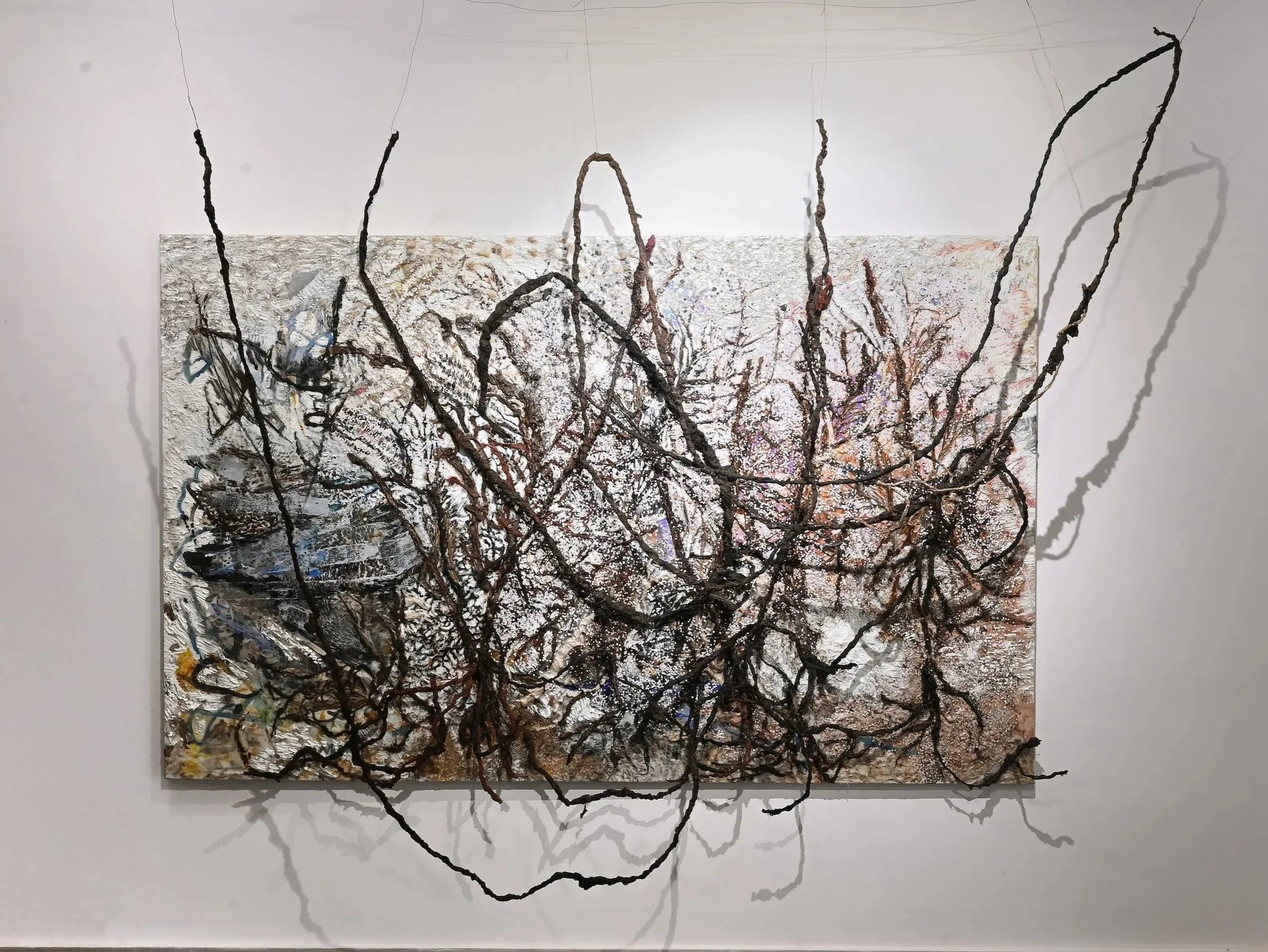
Jayashree Chakravarty | Living extensions | Oil, acrylic, organic material, glue and wire on canvas | 54 x 82 x 20 in | 2026
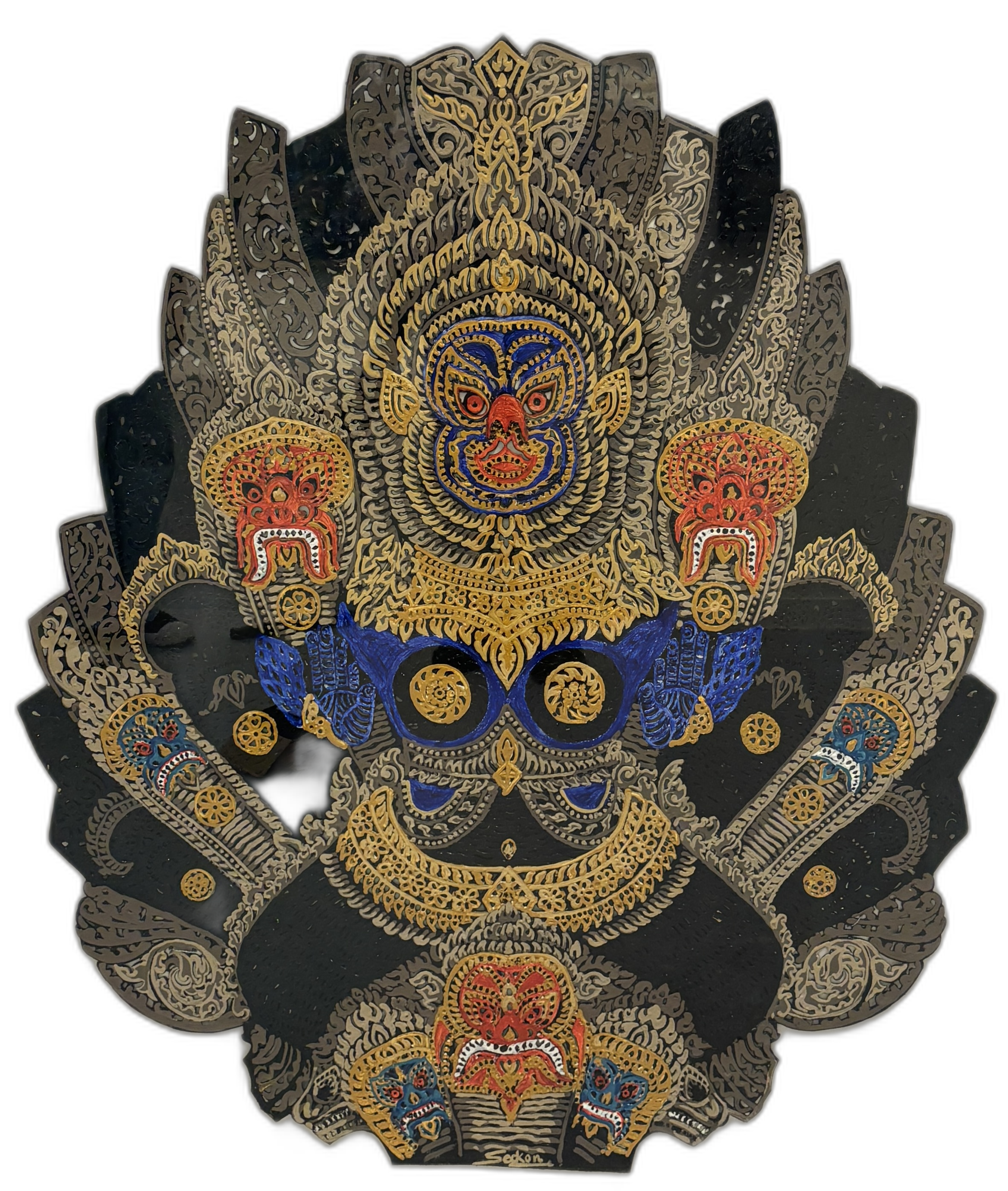
Leang Seckon | Unity (Double - sided: Front & Back) | Acrylic on Leather | 44.5 x 38.5 x 3.5 in | 2026

Leang Seckon | Victory (Double - sided: Front & Back) | Acrylic on Leather | 42.5 x 31 x 4 in | 2026

Leang Seckon | Who Owns the Land | Mixed Media on Canvas | 23 x 26.5 in | 2022
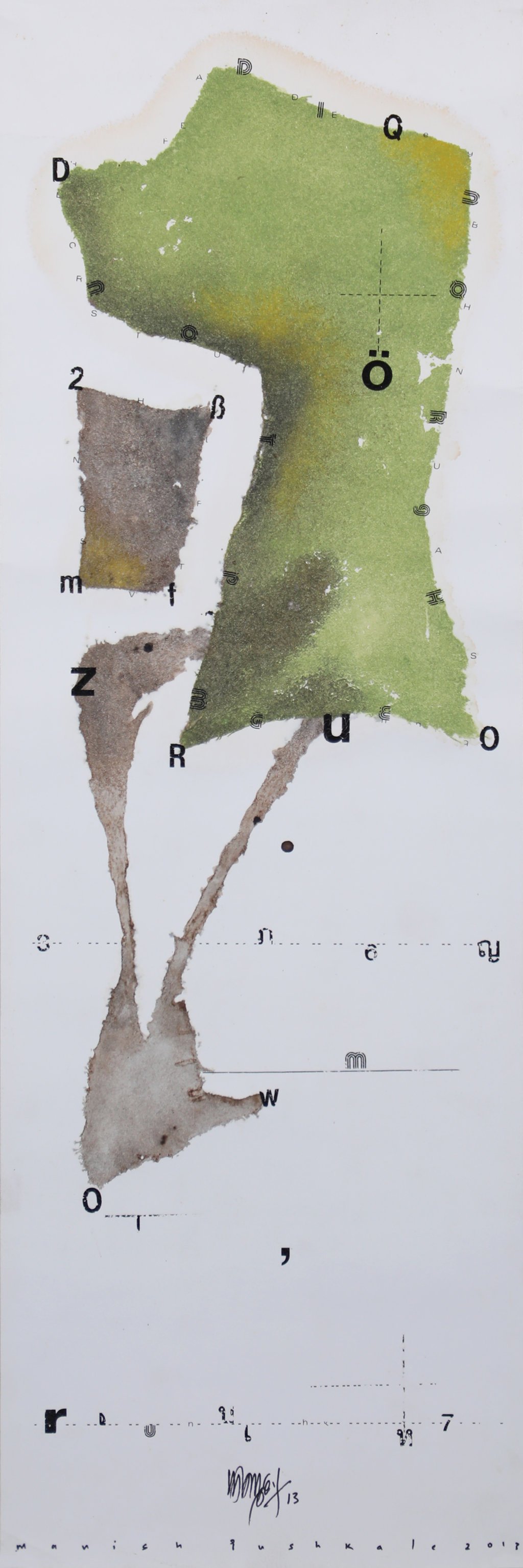
Manish Pushkale | Untitled 2 | Acrylic on paper | 30 x 10 in | 2013
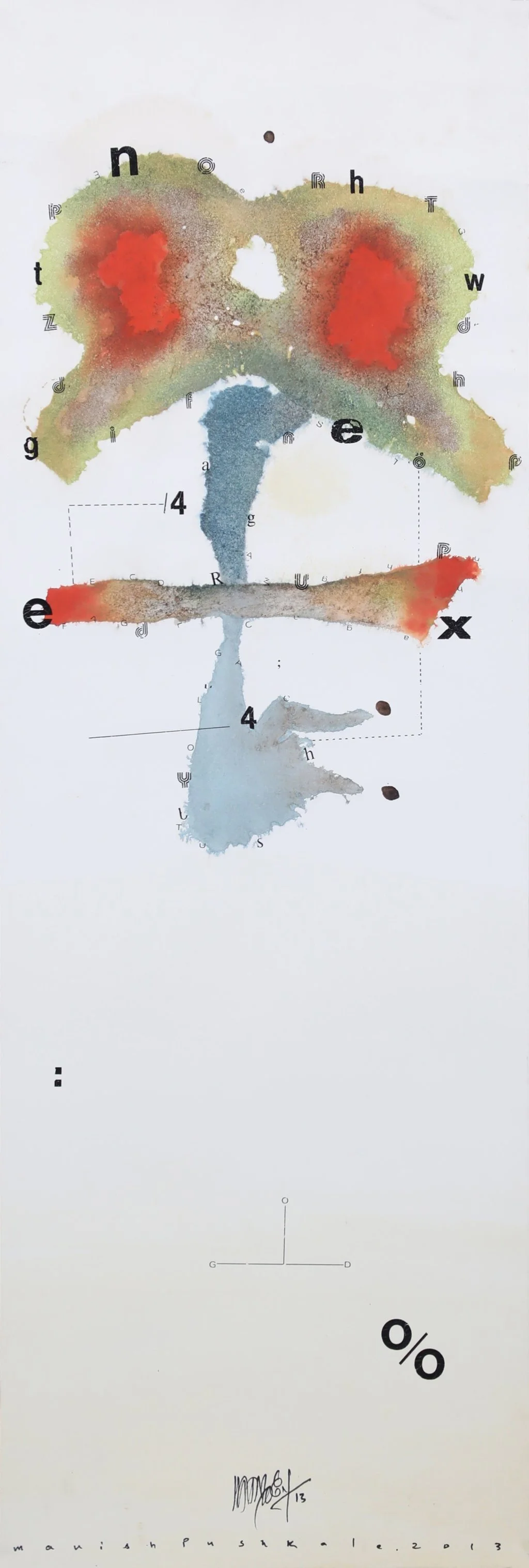
Manish Pushkale | Untitled 3 | Acrylic on paper | 30 x 10 in | 2013

Manish Pushkale | Nahi - Hain | Acrylic on Paper | 39.5 x 55.5 in | 2026
C. Douglas (b. 1951)
Born in Kerala in 1951, C. Douglas is one of the most collected artists of the Madras Art Movement. He retains the essence of Kerala in the form of theories and words read during his boyhood and the story of an early encounter with existential literature. He attended Balan Nair’s school for a year. During the period, he met K Damodaran in Tellicherry. In 1971, he took admission at the Government College of Arts and Crafts, Madras, where he worked with terracotta and ceramic vases. During his college years, he began spending his weekends at Cholamandal Artists’ Village, near Chennai, where he came in contact with K Ramanujam.
Ramanujam’s death in 1973, Douglas’ own relocation from the Cholamandal Artists’ Village to Germany, where he was caught between art and the real world, brought about a change in his outlook as an artist. Germany taught him the importance of painters like Paniker and Ramanujam through their lens. It was in Germany that he was exposed to the genre of abstract surrealism. From 1985 to 1995, he turned to figurative abstractions, and his works speak volumes about modernist poetry. He worked with paper, cloth, and tea stain, and he would often walk on the paper and crumple it to create a surface of his own. There is an assumption that the man with bandages on his head in Douglas’ series, Missed Call (2008), is a self-portrait.
The artist lives and works in Chennai.
Debasish Mukherjee (b. 1973)
Debasish Mukherjee (b. 1973) was born in Chapra, a historically important town in Bihar. He grew up amidst open spaces and railway colonies, mixing freely with people from various social backgrounds. He graduated from Banaras Hindu University with a specialisation in Painting. Rooted in India, Mukherjee manifests his keen observations of India’s built environment, social fabric, and events from his day-to-day life into his art practice. Mukherjee’s work tends to interrogate the way an object or memory is preserved, celebrated, or neglected.
He has also conducted extensive research with weavers and artisans across India, especially within Uttar Pradesh, Rajasthan, Odisha, and Gujarat. He has had solo exhibitions, including Whispering Lanes at Akar Prakar, Delhi (2023); River Song at Akar Prakar, New Delhi (2019), and Museum Within at Akar Prakar, New Delhi (2016). He has also participated in numerous group shows including The Legacy of Loss: Perspective on the Partition of Bengal at Kolkata Centre for Creativity (2021); Multitudes & Assemblages for Hub India at Accademia Albertina di Belle Arti, Turin, Italy (2022); Inner Life of Things: Around Anatomies and Armatures curated by Roobina Karode at Kiran Nadar Museum of Art, Noida 2022); Partition of India…1947 at National Gallery of Modern Art, Delhi (2022); Freedom and Awakening at The Alipore Museum with Kolkata Centre for Creativity (2023); the India Art, Architecture and Design Biennale at Red Fort, New Delhi (2023); The Architecture of Remembrance for Chennai Photo Biennale (2024-25) and Material as Metaphor at The National Gallery of Modern Art, Kolkata (2025); Memory Matrix at the Ballarat International Foto Biennale (2025); Zameen at Birla Academy of Art & Culture, Kolkata (2026) to name a few. His works are in permanent collections such as the Kiran Nadar Museum of Art and The Partition Museum, Delhi.
The artist lives and works in New Delhi.
Ganesh Haloi (b. 1936)
Ganesh Haloi (b.1936) is a Kolkata-based artist, born in Jamalpur, Mymensingh (now in Bangladesh). He moved to Calcutta in 1950 following the Partition of India. The trauma of displacement left its mark on his work as it did on some other painters of his generation. Since then, his art has exhibited an innate lyricism and a sense of nostalgia for a lost world. He graduated from the Government College of Art and Craft, Calcutta in 1956. In the following year, he was appointed by the Archaeological Survey of India to create replicas of Ajanta murals. Seven years later, Haloi returned to Calcutta. From 1963 until his retirement, he taught at the Government College of Art and Crafts. He has been a Member of The Society of Contemporary Artists, Calcutta since 1971.
He has participated in several group exhibitions in India, Documenta 14 at Athens & Kassel, Greece/Germany; Architecture of Life, at Berkeley Art Museum & Pacific Film Archives at BAM/PFA, Berkeley, California; 8th Berlin Biennale for Contemporary Art, Berlin; A Special Arrow Was Shot in the Neck, David Roberts Art Foundation, London; and over the edge, crossing the line five artists from Bengal at KNMA, Delhi. He is represented by Akar Prakar in Kolkata & New Delhi. He has had various solo exhibitions in Kolkata, Delhi, Mumbai, Dhaka, and New York including Re-citations: rhymes, about land, water and sky six decades of painting at Birla Academy of Art and Culture, Kolkata with KNMA, 2024; Re-citing Land at The Jehangir Nicholson Art Foundation, Mumbai in collaboration with KNMA, Delhi 2022; The Architectonics of Form at Akar Prakar Kolkata and New Delhi in 2022, Form & Play at Asia Week New York in 2020 to name a few.
Jayashree Chakravarty (b. 1956)
Jayashree Chakravarty (b. 1956) completed her Graduation at Visva Bharati in the sprawling natural environs of Santiniketan. She pursued her Master’s at the Faculty of Fine Arts at The Maharaja Sayajirao University, Baroda, where she was exposed to an urban sensibility. She was also an artist-in-residence at Aix-en-Provence from 1993-95 and was inspired by the artistic explorations of the region, contributing to her visual language. Inventing her own creative techniques, using organic material and varied kinds of papers, her installations in the form of paper scrolls remain unique in their conception and execution.
Jayashree has had exhibitions both in India and abroad, with shows at various museums, including the Musée Départemental des Arts Asiatiques, Nice, France; The Tagore Centre, Berlin, Germany; Chicago Cultural Centre, Illinois, USA, and Singapore Art Museum (SAM), Singapore, to name a few. Her recent shows include her exhibition at the Palazzo Madama, Turin, Italy; Musée Guimet, Paris, France; Asian Art Museum, San Francisco; Louvre Abu Dhabi; Chhatrapati Shivaji Maharaj Vastu Sangrahalaya, Mumbai, and Kiran Nadar Museum of Art, Noida & New Delhi. Her works have also been recently exhibited as part of the Kochi Muziris Biennale 2025-26 and the Bengal Biennale in 2024.
The artist lives and works in Kolkata, India.
Leang Seckon (b.1970)
Born in Prey Veng province, Cambodia, in 1970, artist Leang Seckon completed his graduation in 2002 from the Royal University of Fine Arts, Phnom Penh. Among the foremost members of the emerging Cambodian contemporary art scene, Leang Seckon grew up in the early 1970s at the onset of the American bombings of Indochina and during the rise of the brutal Khmer Rouge regime.
His selected solo and group exhibitions internationally include the University of Michigan Museum of Art, Michigan, USA (2024); The Weight of Freedom at Akar Prakar, New Delhi (2024); documenta fifteen, with Sa Sa Art Projects, Kassel, Germany (2022); Leang Seckon Prophecy, Macnichols Civic Center, Denver, USA (2019); Out of Line at Akar Prakar, Delhi (2019); Rebirth Revitalise Regeneration, National Museum of Cambodia, Phnom Penh, Cambodia (2017); Mekong New Mythologies, Hong Kong Arts Center, Hong Kong (2016); the Thematic Exhibition, Shanghai Biennale (2012); Kathmandu International Art Festival, Nepal (2012) and Hell on Earth, Rossi & Rossi, London, UK (2014); 8th Asia Pacific Triennial of Contemporary Art (APT8) held at Queensland Art Gallery and Gallery of Modern Art in Brisbane, Australia in (2015); 4th Fukuoka Asian Art Triennale in Japan in (2009); the ASEAN New Zero Contemporary Art Exchange, Yangon, Myanmar, also in (2009), and his Rubbish Project (2008) a public project in Phnom Penh.
He is the recipient of numerous awards and residencies such as the ArtVarta Residency in collaboration with Khoj Artists’ Association, 2023; Residency at Bronx Museum of the Arts, New York, 2013; Residency at Fukuoka Asian Art Museum, Fukuoka, Japan, 2009 and the Sovereign Asian Art Prize, The Sovereign Art Foundation, Hong Kong in 2009, to name a few. The artist lives and works in Phnom Penh, Cambodia.
Manish Pushkale (b. 1973)
Manish Pushkale (b. 1973) is an autodidact who honed his artistic style and sensibility in the fertile and creative ambience of Bharat Bhavan, Bhopal. The intellectual rigour of Bharat Bhavan’s founders in its early decades, its deeply held Indian values and its uncompromising artistic mission to foster these values in art have formed the foundation of Pushkale’s subsequent career as a celebrated abstract artist. His calm, contemplative canvases dwell upon the ebb and flow of civilisation and its underlying spirituality through themes of genesis, progress and change. This reflective consciousness is tied to his deep interests in archaeology and geology, of which the latter he studied during his Master’s in Bhopal.
Pushkale’s works have been widely exhibited in India and internationally over the last 25 years. He has participated in several group shows, including Multitudes & Assemblages at Accademia Albertina di Belle Arti, Turin, Italy, in 2021; Musée de Guéthary, with Akar Prakar and ICCR, representing the country at the Festival of India in France in 2016; a two-person show with his guru S.H. Raza as a parallel exhibition to the Venice Biennale in 2010. Some of his solo shows include Carte Blanche: To Whom the Bird Should Speak? at Musée Guimet, Paris in 2023-24; Consistent (in)consistency at Akar Prakar, Kolkata in 2023; Tracing the Cartographer’s Trail at Bharat Bhavan, Bhopal, in 2022 and at Akar Prakar in 2021; Lamina at Akar Prakar, 2018; Painter of Light, Akar Prakar, 2017. He is the recipient of numerous awards and residencies such as a fellowship at the Nantes Institute of Advanced Study in 2014 and the Grand Award at Bharat Bhavan Biennale, Bhopal, in 2018.
The artist lives and works in New Delhi.